Last Updated on September 2, 2026 by Deon
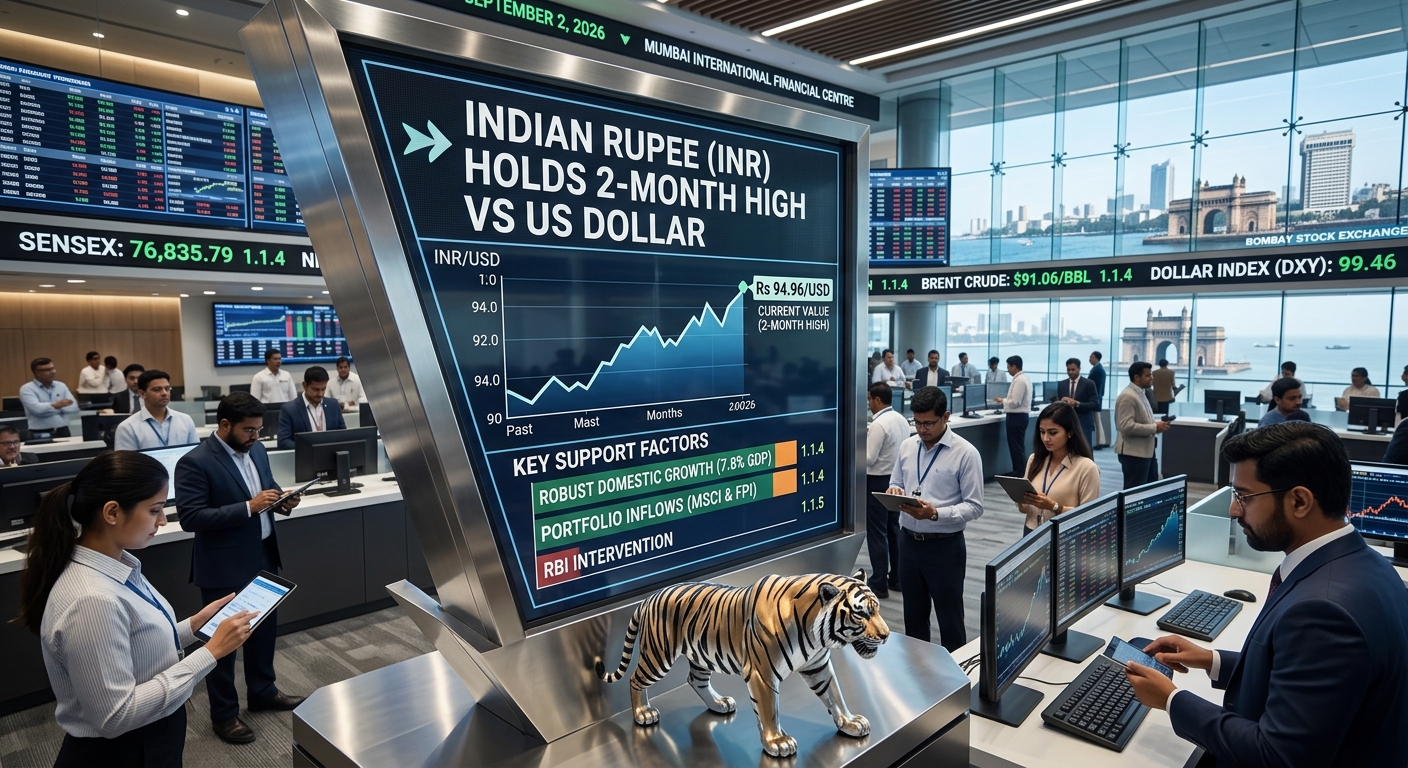
The Indian Rupee remained close to a two-month high against the US Dollar on Wednesday showing resilience despite renewed strength in the Greenback and growing expectations that the Federal Reserve could raise interest rates this month.
The Indian Rupee opened flat around 94.90 per US Dollar staying close to the two-month low in the USD/INR pair at 94.80 reached during the previous session. A lower USD/INR rate indicates an Indian Rupee because fewer rupees are required to purchase one US Dollar.
The Rupees recent performance comes against a challenging global backdrop. The US Dollar has strengthened as markets increasingly price in a Federal Reserve rate hike while rising oil prices and geopolitical tensions around the Strait of Hormuz have increased inflation concerns.
At the time Indias improving economic outlook and expectations for strong festive-season demand are providing domestic support for the INR.
US Dollar Strength Creates Headwind for Indian Rupee
The US Dollar has recently regained momentum as traders reassess the Federal Reserve’s interest rate outlook. The US Dollar Index (DXY) which measures the Greenback against six currencies was trading near 99.80, its highest level in more than two weeks.
A stronger US Dollar normally creates pressure on emerging-market currencies such as the Rupee. Higher US interest rates can encourage investors to move funds toward Dollar-denominated assets potentially reducing demand for currencies such as the INR.
Market expectations for Federal Reserve policy have become hawkish. Strategists at Brown Brothers Harriman said Fed funds futures were pricing a 67% probability of a 25-basis-point rate hike on September 16 while markets were implying around 60 basis points of tightening over the following 12 months.
If those expectations strengthen further the US Dollar could gain support and make it more difficult for the Indian Rupee to extend its recent gains.
Rising Oil Prices Add to Indias Currency Risks
Oil prices are another factor for the Indian Rupee. India is an importer of crude oil so a sustained increase in energy prices can increase the countrys import bill and put pressure on its external accounts.
Recent geopolitical tensions involving the United States and Iran have raised concerns about disruptions to energy supplies through the Strait of Hormuz. The waterway is strategically important for oil shipments and reduced shipping activity has added to fears of a prolonged supply disruption.
FXStreet reported that five vessels had passed through the Strait based on Kpler data, well below the 10-day average of about 14 vessels. Continued tensions in the region could therefore keep oil prices elevated and create another challenge for the INR.
For the rupee, a further rise in crude oil prices could increase demand for US dollars from Indian importers and potentially push USD/INR higher.
Stronger Indian Growth Supports the Rupee
Despite risks Indias domestic economic outlook has improved.
Standard Chartered raised its forecast for Indias year 2027 GDP growth to 7.2% from 6.6% pointing to stronger-than-expected economic activity and positive momentum in recent data.
Indias first-quarter FY27 GDP growth reached 7.8% above the 7.3% consensus expectation cited by the bank. The institution also raised its estimate for quarter FY27 growth to 7.4% from 6.6%.
Expectations for economic activity during the countrys festive season are another positive factor. Strong consumer demand can support business activity, investment and employment helping maintain confidence in Indias outlook.
This stronger domestic growth story is helping offset some of the pressure created by the US Dollar and higher energy prices.
US Jobs Data Could Drive the INR Move
US employment data is likely to be one of the biggest market drivers for the Indian Rupee in the coming days.
Investors are watching the ADP Employment Change report on Wednesday followed by the Nonfarm Payrolls (NFP) report on Friday. The data could significantly influence expectations for Federal Reserve interest rates and therefore the US Dollar.
The ADP report was expected to show that US private-sector employers added around 48,000 jobs in August above Julys 44,000 increase. However the official NFP report will likely receive attention because it provides a broader picture of the US labor market.
A stronger-than-expected jobs report could reinforce expectations for a Fed rate hike. Support the Dollar. This could put pressure on the Rupee.
Conversely weaker employment data could reduce expectations for Fed tightening. Lower US rate expectations could weaken the Dollar. Give the INR more room to strengthen.
USD/INR Technical Outlook
From a perspective USD/INR remains under short-term bearish pressure.
The pair was trading around 94.90 below its 20-period Exponential Moving Average at 95.41. The Relative Strength Index was near 35 indicating downside momentum and suggesting that buyers have remained cautious.
The 94.80 area is currently a support level. A decisive break below this two-month low could expose the pair to the June low around 94.15.
On the upside the 20-day EMA around 95.41 represents a resistance area. A sustained move above this level could signal that USD/INR is beginning to recover and that the Indian Rupee is losing some of its strength.
Traders should therefore pay attention to the 94.80 and 95.41 levels when assessing the near-term direction of USD/INR.
Indian Rupee Outlook
The Indian Rupee has shown resilience despite several factors that could normally weigh on an emerging-market currency. Stronger Indian economic growth, positive domestic momentum and expectations for festive demand have helped support the INR.
However the outlook remains complicated. A hawkish Federal Reserve, US dollar, and elevated oil prices could create renewed selling pressure on the Rupee.
The next major direction could depend on US employment data and developments in the energy market. A weaker US jobs report combined with easing oil prices could help the INR move toward highs against the Dollar. On the hand stronger US employment and further gains in crude oil could push USD/INR higher.
For now 94.80 remains the technical support, for USD/INR, while 95.41 is the important upside barrier. The Indian Rupee remains near a two-month high. Its ability to hold those gains will depend on whether strong domestic growth can continue to offset a stronger Dollar and rising external risks.