Last Updated on October 1, 2026 by Deon
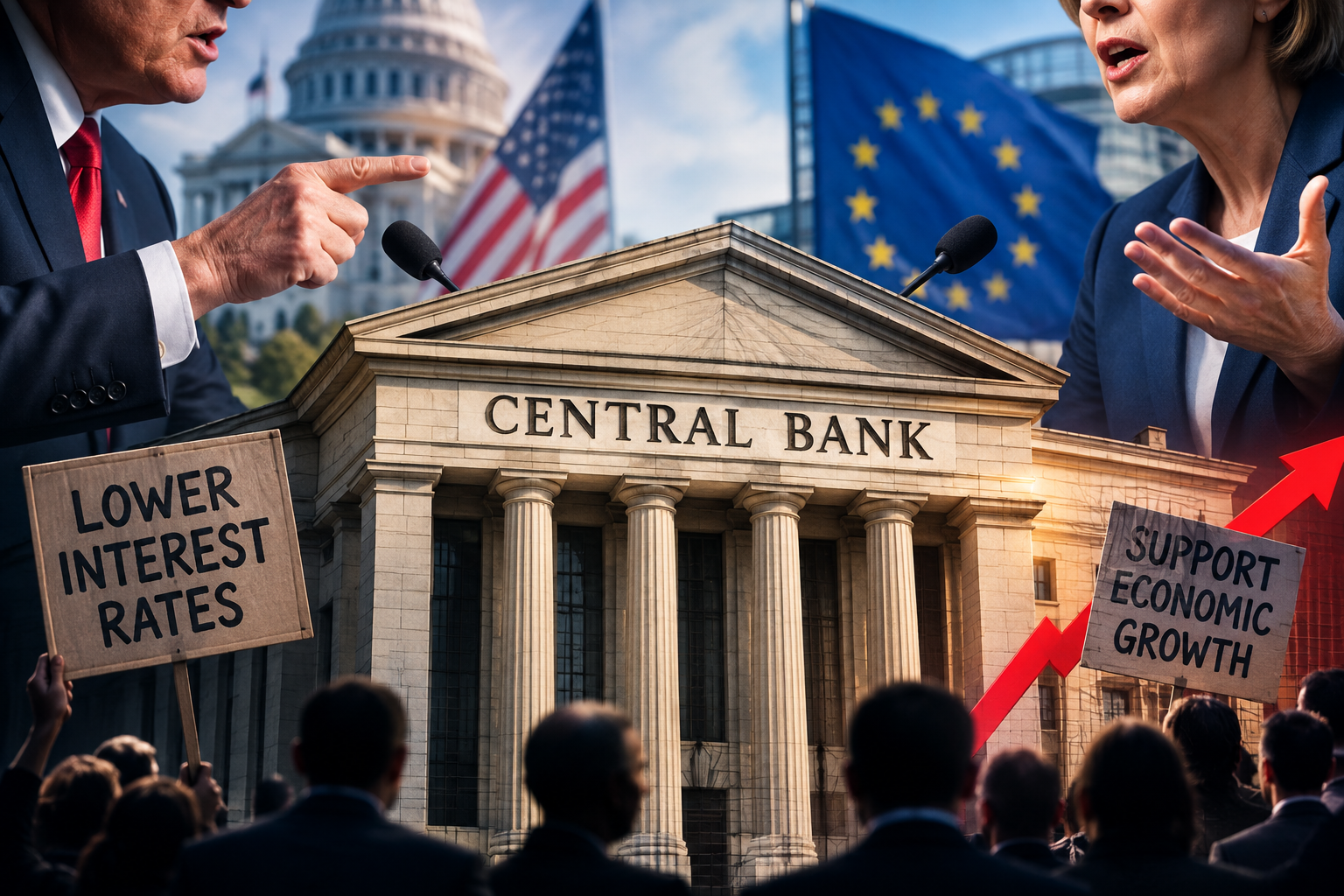
Central banks are under political and economic pressure because governments deal with higher energy costs worries about inflation and shifting economic conditions. A new report from Rabobanks RaboResearch Global Economics & Markets shows that political scrutiny of central banks, such as the European Central Bank (ECB) Federal Reserve and Bank of England is growing.
This matter matters to markets because the independence of central banks is key to shaping expectations about monetary policy. Investors watch closely to see if political changes might affect decisions on interest rates, inflation and economic help.
ECB Faces Energy and Fiscal Challenges
In Europe energy costs are still a worry for policymakers. Rabobank says that Italian Prime Minister Giorgia Meloni has reportedly asked European Commission President Ursula von der Leyen to give countries freedom to spend money to deal with the current energy crisis.
This spending could matter to the ECB because more fiscal help can affect demand and inflation. If governments raise spending to shield households and businesses from energy costs central bankers may have to check whether those steps add extra inflation pressure.
The situation creates a balance. Governments may look for policies that ease the hit of higher energy prices while central banks stay focused on keeping prices stable.
Federal Reserve Under Scrutiny
The Federal Reserve is also getting attention.
Rabobanks report talks about Fed Chair and current FOMC voter Jerome Powell and the controversy about renovations to the Federal Reserve building. The report says that Powell was cleared of wrongdoing about the roughly $2.5 billion renovation project but the review found problems with how the project was led.
This issue shows the scrutiny that big public institutions face. Even though the renovation controversy is separate from money policy decisions the political focus on the Federal Reserve can matter to talks about independence and public trust.
For markets how people see the Fed can affect expectations for interest rates and the US dollar.
Bank of England Also Faces Political Debate
The Bank of England has also faced criticism.
Rabobank cites remarks from former UK Prime Minister Liz Truss, who again said she was pushed out of office by a deep state that included the Bank of England. The report says Truss had earlier threatened reforms that involved the bank.
These comments are a claim by Truss, not a proven fact about the Bank of England. Still they add to the debate about how elected governments relate to independent money institutions.
Why Central Bank Independence Matters
Central banks usually work with some independence so that money policy decisions can focus on conditions instead of short-term political goals.
Deciding on interest rates can have political effects. Higher rates raise borrowing costs for households, companies and governments. Lower rates can boost activity but may add inflation pressure when demand is already strong.
This creates a tension between money policy and government priorities.
When inflation is high central banks may have to keep policy even if governments want lower borrowing costs. In contrast when the economy is weak governments may like policies that spur growth.
Markets Watch Inflation Risks
The political economy debate happens when markets are already watching inflation risks closely.
Energy prices matter a lot. Higher oil and gas costs can raise transportation, production and household expenses which can keep inflation high for longer.
For the ECB, Fed and Bank of England new inflation pressure could make the outlook for interest rates more complicated.
Investors must watch both data and political news. Inflation, employment, government spending and energy prices can all shape expectations for money policy.
Impact on Financial Markets
Changes in expectations about central-bank policy can affect big markets.
Higher interest-rate expectations can lift government bond yields. May strengthen a currency. Lower rate expectations can do the opposite.
Equity markets can also change as investors rethink borrowing costs and company values.
The euro, US dollar and British pound could stay sensitive to changes involving their banks.
Government bond markets are another area to watch. If investors think fiscal policy could raise inflation or government borrowing longer-term bond yields may rise.
Political Economy Becomes More Important
The latest Rabobank analysis shows that money policy cannot be seen alone, from the political and economic setting.
Energy shocks, policy, public spending and political criticism can all change the setting where central banks work.. Political pressure does not always mean money-policy decisions will shift.
For traders the key is to distinguish between statements, confirmed policy changes and actual central‑bank decisions.
Central banks face growing scrutiny as governments tackle energy costs inflation risks and economic pressures. Rabobank highlights developments involving the ECB, Federal Reserve and Bank of England as examples of the complex political economy surrounding monetary policy.
For markets the focus remains on how these pressures interact with inflation, government spending and interest‑rate expectations. Traders will keep watching communication, economic data and fiscal developments for clues, about the future direction of monetary policy.