Last Updated on October 1, 2026 by Deon
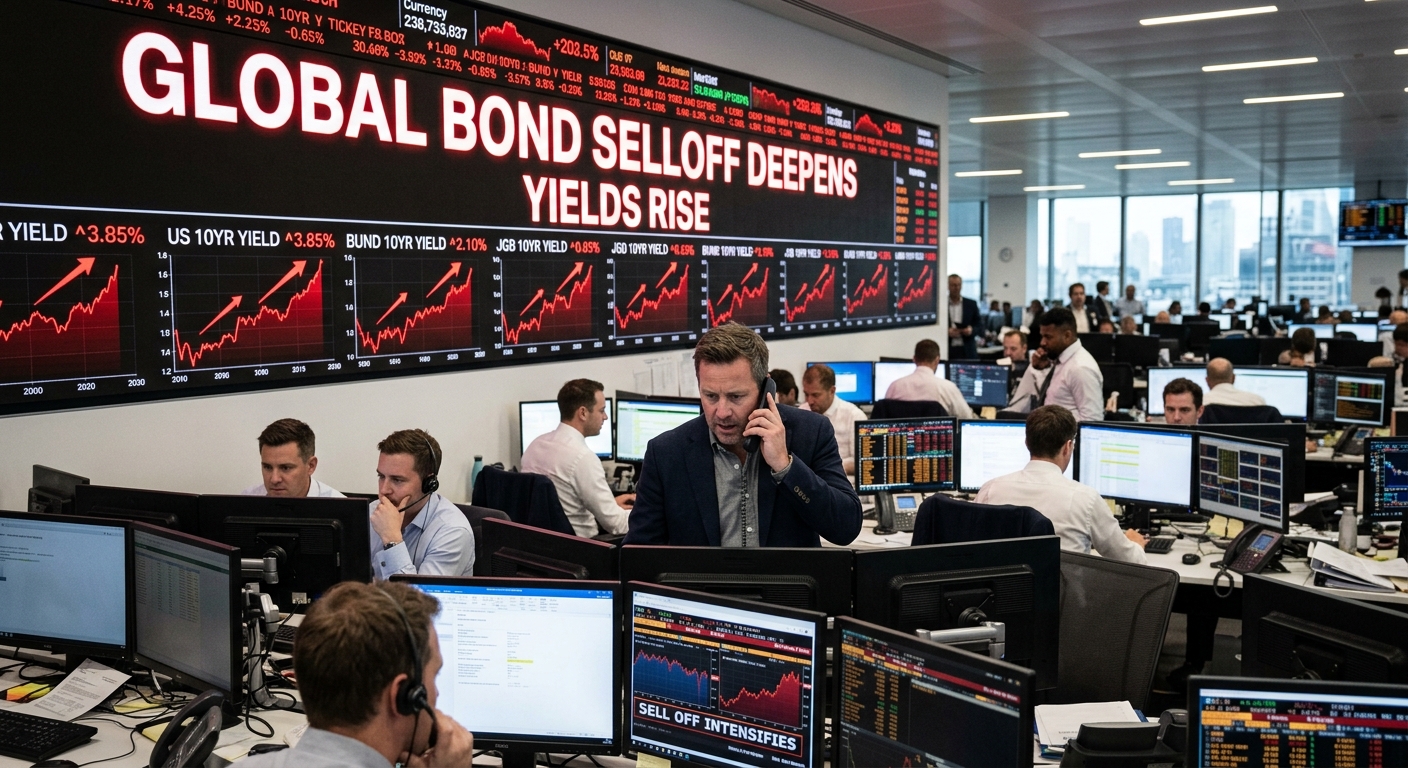
Global bond markets are facing selling pressure. Investors want pay for holding longer‑term government debt. Rising term premiums, higher energy costs and worries about inflation push bond yields in all major economies.
The latest market moves show a growing challenge for investors. Long‑term borrowing costs are rising even though some recent inflation data shows signs of easing.
Bond Selloff Spreads Across Major Markets
The latest selloff has hit government bond markets in the United States, Europe and the United Kingdom. US Treasury yields have jumped sharply. The 10‑year yield has reached levels not seen since 2002. The 30‑year Treasury yield has also climbed significantly.
The move is not limited to the US. UK 30‑year gilt yields have risen above 6%. French government bonds have also felt selling pressure. These moves show that investors are reassessing the outlook for inflation government borrowing and interest rates in all developed economies.
Rising Term Premium Adds Pressure
One key factor behind the bond market weakness is the rise in the term premium.
The term premium is the return investors demand for holding longer‑term bonds instead of shorter‑term securities. When uncertainty about inflation, fiscal policy or future interest rates rises investors may need a premium.
Higher term premiums can push long‑term bond yields higher even if expectations for short‑term central bank policy stay largely unchanged.
This is especially important because long‑term government bond yields set borrowing costs across the economy. They affect mortgages, corporate loans and other kinds of financing.
Oil Prices Increase Inflation Concerns
Higher energy costs are another factor affecting bond markets. Brent crude stays high amid uncertainty about Middle East events and US‑Iran talks. Deutsche Bank’s Jim Reid links the rise in oil prices in the third quarter to the broader global bond selloff.
Higher oil prices raise transportation and production costs sparking concerns about inflation. Investors may therefore doubt that central banks can cut interest rates quickly.
The mix of energy prices and rising bond yields is a big market theme as we enter the final quarter of 2026.
US Inflation Data Provides a Mixed Signal
The bond selloff happens even though some US inflation figures are softer.
August headline PCE inflation rose 0.3% from month to month. Core PCE grew 0.2%. Annual headline PCE inflation slowed to 3.4% below the 3.7% forecast. These numbers lowered expectations for a Federal Reserve rate hike.
However the inflation improvement is not enough to reverse the bond market trend.
Investors also weigh energy costs, fiscal spending, economic growth and future inflation risks. This explains why long‑term yields can stay high when some short‑term inflation signs improve.
Why Higher Yields Matter for Stocks
Rising government bond yields can also affect equity markets.
When Treasury yields go up bonds may feel more attractive than stocks especially when stock prices are already high. BBH has pointed out that rising yields can make stock valuations harder to justify.
Higher yields also raise the discount rate used to value corporate earnings. Growth companies may then feel more sensitive to changes in long‑term interest rates.
Recent market moves already show pressure on major equity indexes as investors reassess risk.
Impact on the US Dollar
Bond market moves can also affect the foreign exchange market.
Higher US Treasury yields may back the US dollar by boosting the return on dollar assets. Recent trading shows demand for the dollar and Swiss franc as investors seek assets during market stress.
The dollar’s path will also depend on Federal Reserve expectations, economic data and yields outside the United States.
Investors Watch Jobs Data
Attention now turns to US employment data.
The September Nonfarm Payrolls report matters a lot because it could shape expectations for Federal Reserve policy. FXStreet’s consensus expects about 90,000 jobs and a 4.1% unemployment rate.
A weaker labor‑market report might lower expectations for rate hikes. A stronger employment report could reinforce worries, about economic strength and inflation.
What Traders Should Watch
Several factors could decide if the bond selloff continues:
US Treasury yields and the 10‑year term premium
Oil prices and Middle East developments
US employment and inflation data
Federal Reserve interest‑rate expectations
Government borrowing and fiscal policies
European bond-market spreads
Equity-market reactions to yields
The way these factors influence each other will stay important for currencies, commodities, stocks and fixed‑income markets.
Conclusion
The global bond selloff is getting deeper because investors want returns for holding longer‑term government debt. Rising term premiums, higher oil prices, fiscal worries and inflation threats continue to push bond yields up.
Even though recent US inflation data gives some relief the broader market still focuses on long‑term risks. Treasury yields are at highs and major European and UK bond markets are also under pressure. Therefore upcoming employment numbers and central‑bank expectations will be watched closely.
For traders the bond market stays a signal, for understanding the direction of the US dollar, equities and other major financial assets.