Last Updated on August 29, 2026 by Deon
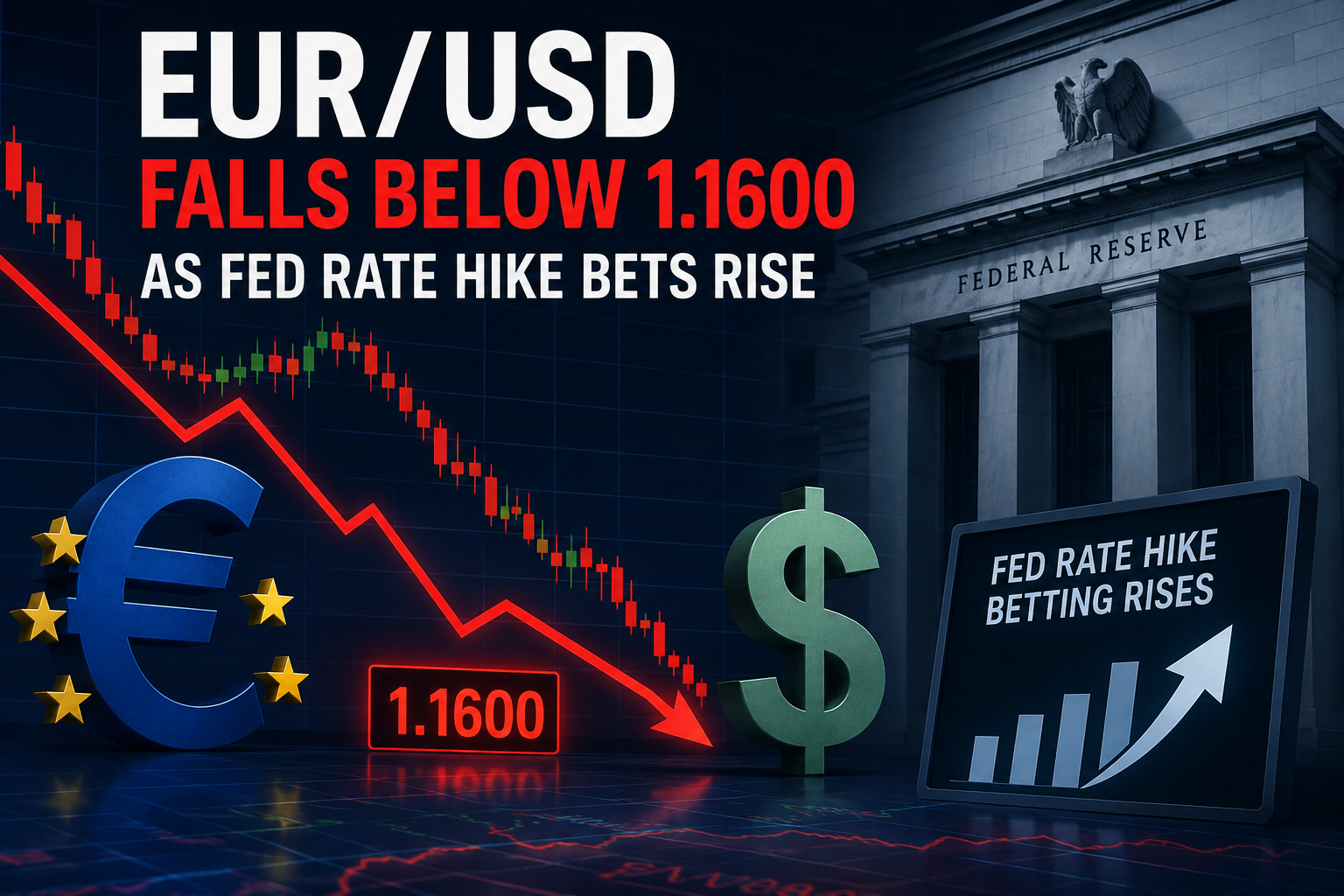
The EUR/USD pair faced selling pressure on Friday. It slipped below the 1.1600 level while the US Dollar gained momentum. This fall followed comments from Federal Reserve Chair Kevin Warsh. Kevin Warsh focused strongly on inflation. Suggested that US monetary conditions may not be restrictive enough.
Warsh’s remarks at the Jackson Hole Symposium quickly changed market expectations. Traders increased their bets that the Federal Reserve could raise interest rates at its September meeting. This gave the US Dollar support and pushed the Euro lower.
According to the FXStreet report, EUR/USD moved toward 1.1595. Was down about 0.48% on the day at the time of writing. The sharp move showed how sensitive the currency market remains to changes in expectations surrounding US interest rates.
Hawkish Fed Comments Lift the US Dollar
Kevin Warsh’s speech delivered a message: the Federal Reserve still has work to do on inflation. He stressed that price stability should remain the banks main priority. He indicated that policymakers need confidence that underlying inflation is moving back toward the Feds target.
Warsh also questioned whether current financial conditions could truly be described as restrictive. He pointed to healthy credit and loan markets. He suggested that the impact of monetary policy may not be as strong as some investors previously believed.
This hawkish tone encouraged traders to reconsider their expectations for the Federal Reserve meeting. Before the speech markets were assigning a probability to a September interest rate increase. However those expectations changed rapidly after Warshs comments.
Markets began pricing in about a 57% chance of a September Fed rate hike compared with 36% before the speech. The shift helped strengthen the US Dollar across currency pairs, including EUR/USD.
Inflation Remains a Major Concern
The main reason behind the market reaction was Warshs concern about inflation. Although recent inflation data have shown some improvement Warsh indicated that the progress was not yet enough to declare victory.
Warsh emphasized the Federal Reserves 2% Personal Consumption Expenditures or PCE inflation target. He suggested that the central bank should remain committed to reaching that goal.
For currency traders this matters because higher interest rates can make the US Dollar more attractive compared with currencies. If the Federal Reserve raises rates while other major central banks maintain an less aggressive policy stance the US Dollar could continue to receive support.
The possibility of a September rate hike has therefore become a factor for the EUR/USD outlook. Traders will now closely watch US inflation reports, employment data and comments from Federal Reserve officials.
Strong US Economy Supports Hawkish Expectations
Warsh also expressed confidence in the performance of the US economy. He described consumer spending healthy and the labor market as stable. He said business investment has continued to grow.
These comments further supported the view that the US economy may be able to handle monetary policy. A strong economy gives the Federal Reserve flexibility to focus on controlling inflation without immediately worrying about a major slowdown.
The latest US employment data provided a relatively stable picture. The preliminary revision to Nonfarm Payrolls showed a reduction of 79,000 jobs for the twelve months through March. However the adjustment was modest compared with a larger revision recorded in the previous year.
Meanwhile the University of Michigan Consumer Sentiment Index for August was revised higher to 51.7 from the estimate of 51. Inflation expectations also showed some improvement. One-year expectations fell to 4% from 4.3%.
Despite these inflation expectations the market remained focused on Warshs strong commitment to price stability. That commitment continued to support the US Dollar.
EUR/USD Technical Outlook Turns Bearish
From a perspective the EUR/USD pair remains under pressure after falling below 1.1600. The pair was trading below both the 100-hour and 200-hour Simple Moving Averages. This is a sign that short-term momentum remains tilted toward the downside.
The break below the channel area near 1.1629 also increased bearish pressure.
The Relative Strength Index or RSI was near territory. This could allow for a short-term recovery or corrective bounce. However oversold conditions do not automatically mean that the broader downtrend has ended.
On the upside resistance may appear near 1.1614 followed by the 1.1629 area. A stronger recovery would need to push EUR/USD above the moving average zone around 1.1655–1.1658. This would reduce selling pressure.
On the downside traders may watch support near 1.1585. If that level breaks the next important area could be around 1.1565.
What Could Happen Next for EUR/USD?
The next direction for EUR/USD will largely depend on how expectations for Federal Reserve policy develop in the coming weeks. If US inflation remains stubborn and economic data continue to show strength, expectations of a September rate hike could grow further.
That scenario could keep the US Dollar supported and place pressure on the Euro.
However currency markets can change quickly. Weaker US economic data or a softer message from Federal Reserve officials could reduce rate-hike expectations and allow EUR/USD to recover.
For now the key development is the sharp shift, in market expectations following Kevin Warshs Jackson Hole remarks. The return of a September Fed rate hike has given the US Dollar fresh momentum and pushed EUR/USD below the psychologically important 1.1600 level.