Last Updated on September 5, 2026 by Deon
Irans efforts to use restrictions around the Strait of Hormuz as leverage against the United States appear to be losing some of their effectiveness. Even though tensions and attacks in the region continue, large amounts of oil from the Gulf are still reaching global markets with support from the United States.
This ongoing flow has helped reduce fears of an severe disruption in global oil supplies.. The conflict is still a major concern for energy markets. If tensions around the Strait of Hormuz rise again it could lead to changes in prices and supply.
US Support Helps Keep Gulf Oil Moving
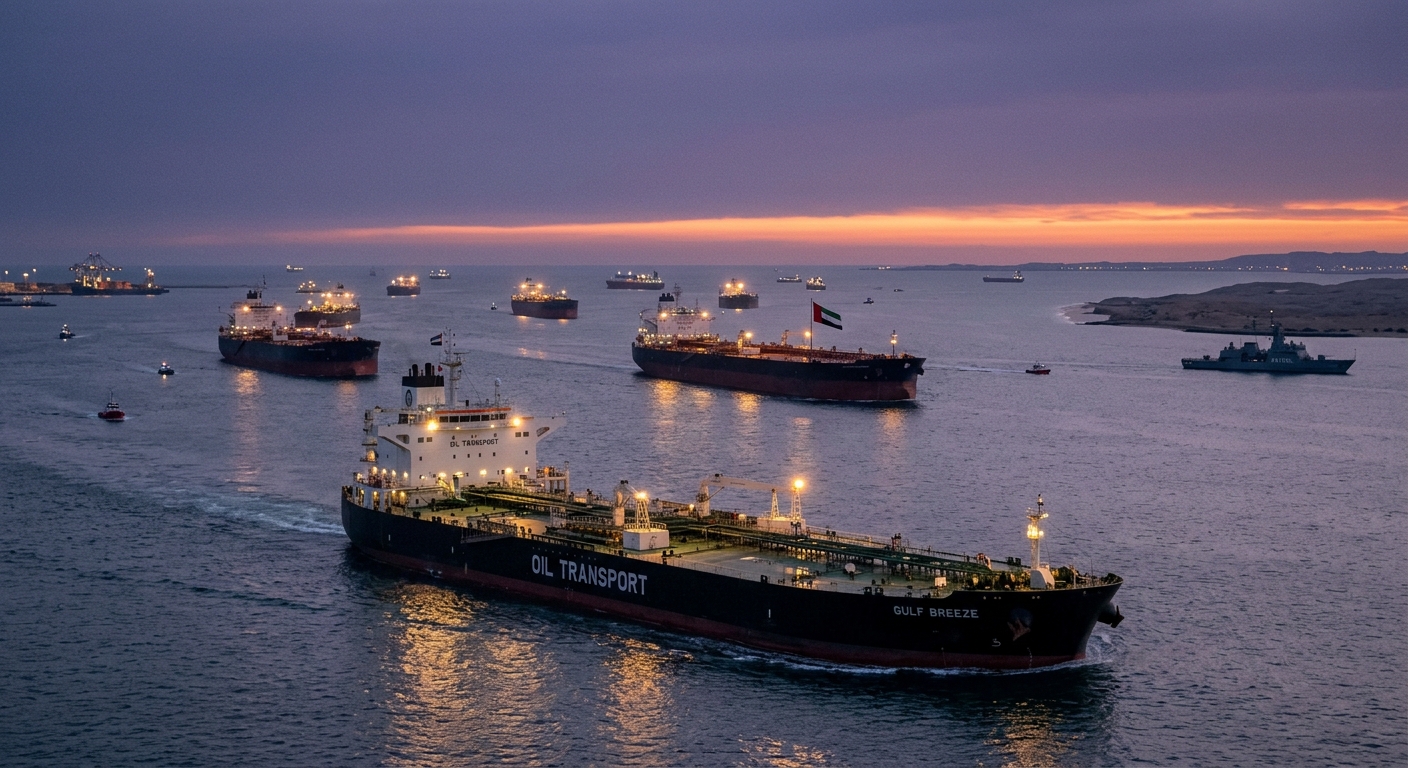
A report from Investing.com says that the United States has played a key role in helping Gulf countries keep oil moving through and around the Strait of Hormuz. Despite missile and drone attacks shipping continues because alternative routes and protected convoys are in place.
The report noted that 5 million barrels of crude oil passed through the Strait of Hormuz on average over the last 28 days. In addition 2.5 million barrels per day moved through ports in the Gulf of Oman. Fujairah in the United Arab Emirates was one of the hubs for these exports.
These numbers show that most of the region’s oil exports are still happening. Because of this global crude prices have stayed below $100 per barrel. That helps keep pressure low on consumers and limits damage to the global economy.
Why the Strait of Hormuz Matters for Oil Markets
The Strait of Hormuz is one of the important ship channels for energy in the world. Under conditions roughly one-fifth of all the world’s crude oil passes through this narrow waterway.
Because much oil moves through here any serious problem can cause immediate effects on oil prices inflation expectations and financial markets. Traders watch every development in the region closely. A big drop in oil flows could tighten supplies quickly. Send prices soaring.
Iran had hoped that blocking shipping would create economic pain to force Washington and other international players to change their stance.. The continued movement of oil from Gulf producers has weakened that idea.
Iran Faces Growing Economic Pressure
While oil shipments from Gulf countries continue Iran has struggled financially. The report said the United States has effectively blocked Iran from exporting oil from the Persian Gulf since July.
At the time domestic problems in Iran are getting worse. The Iranian rial has lost value. Prices are rising fast due to inflation. Fuel shortages are becoming more common across the country. Iranian President Masoud Pezeshkian said trade had dropped sharply because of the conflict.
This growing economic strain may play a role in what happens next. Tehran might need to decide whether to return to talks or step up actions to try to gain more influence.
Global Oil Prices Remain Contained
One reason Iran’s strategy has not worked as well as planned is that the global market has not seen a total loss of Gulf oil. There is still plenty of crude even with all the threats.
China has also helped stabilize things by using its oil reserves and cutting back on imports. This has reduced demand pressure. Kept the market steady. As a result many investors did not see the price jump they once expected.
The oil market remains very sensitive. Even if current conditions hold, a new major attack on ships or energy infrastructure could shift sentiment fast. That could lead to spikes in prices.
Other Gulf Economies Also Feel the Impact
The situation is not just hurting Iran. Other countries in the Gulf are facing difficulties too. The movement of liquefied gas, fertilizers and other goods is still being blocked or delayed.
Countries that don’t have alternative shipping options are especially at risk. A long-term disruption could hurt their export business, lower government income and slow down growth.
So while the oil market has avoided a crisis so far the economic damage from the conflict keeps spreading across the area.
Will Iran Escalate the Conflict?
The biggest question now is whether Iran will cool things down or go further.According to the report Iran has kept attacking tankers and U.S. military sites.. It has not launched major attacks on Saudi Arabia or the United Arab Emirates. At the time the United States has not struck major Iranian cities or targeted national leadership.
That suggests both sides may still want to avoid a war.. The situation remains delicate.Political events in the United States could affect how Iran acts. The upcoming midterm elections might make things more uncertain. If energy prices become a political issue that could influence decisions in Washington and in Tehran.
Oil Market Outlook
For now the steady flow of Gulf crude is helping prevent a supply crisis. Iran’s plan to use the Strait of Hormuz as a weapon seems weaker than people first thought. The United States and Gulf partners are finding ways to keep oil moving.
Still the danger is not gone.
Traders will keep an eye on shipping data, military activity, Iranian attacks and diplomatic moves. Any big escalation near the Strait of Hormuz could bring back fears of shortages. Push oil prices higher.
Key Takeaways
Iran’s attempt to block oil shipments is losing power.
US backing has allowed Gulf nations to maintain crude exports.
About 5 million barrels per day flowed through the Strait of Hormuz recently.
Ports in the Gulf of Oman like Fujairah have supported exports.
Global crude prices have stayed under $100 per barrel despite the tension.
Iran is dealing with worsening issues such as falling trade, high inflation and fuel shortages.
A new outbreak of violence could trigger volatility in oil and energy markets.
In summary the immediate threat of a full-scale oil supply shock has decreased. The Strait of Hormuz remains one of the most critical risk points for global energy markets. Traders should expect ongoing uncertainty as tensions continue to evolve.