Last Updated on September 4, 2026 by Deon
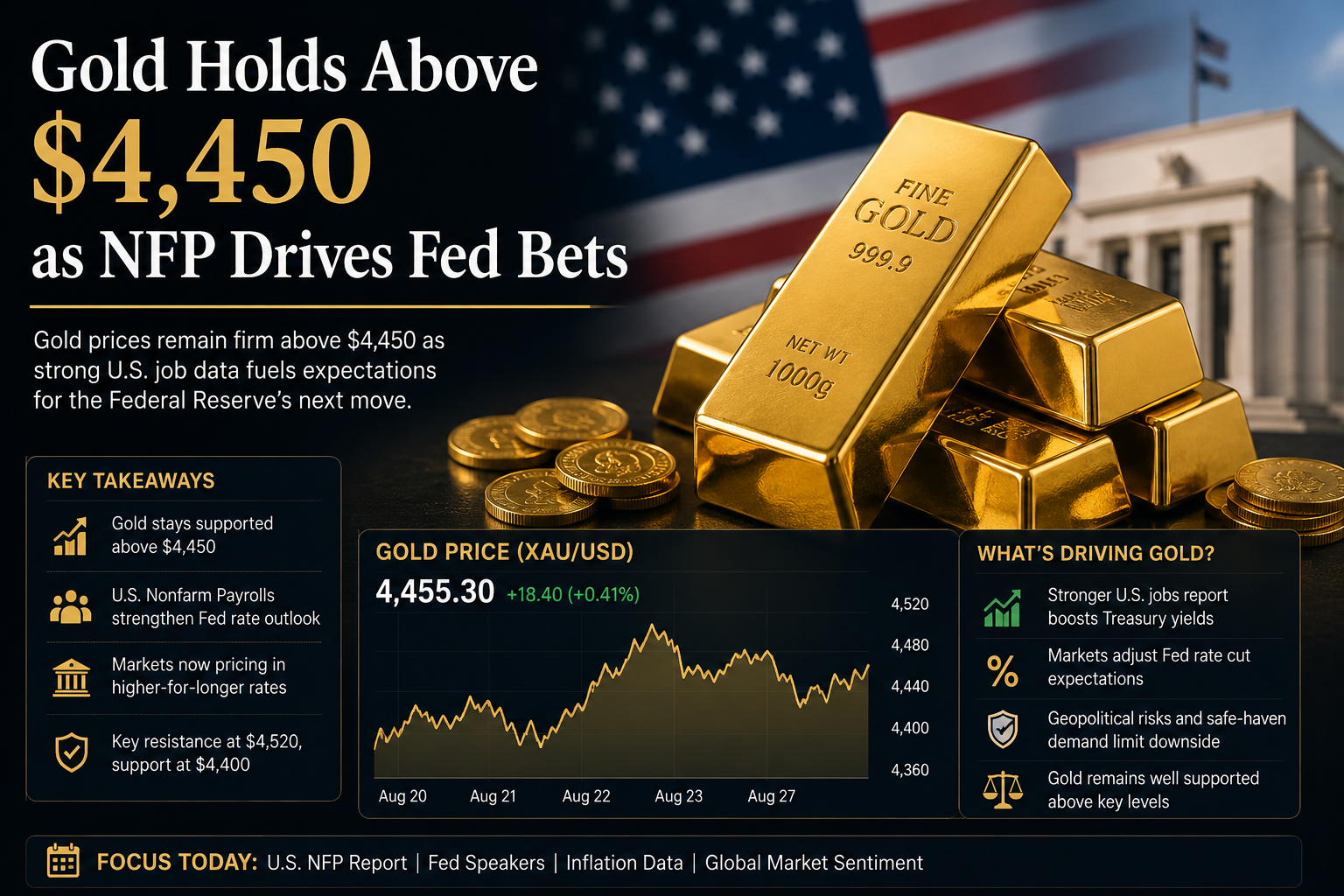
Gold prices stayed mostly steady above the $4,450 level on Friday as traders turned their attention to the US Nonfarm Payrolls report. The precious metal has been trading in a range after bouncing back from recent lows. The $4,500 level keeps acting as a resistance point.
The next big move in Gold (XAU/USD) could come down to how the latest US jobs data plays out and what investors think it means for the Federal Reserve’s interest rate plans.
Gold Traders Await US Jobs Data
The US Nonfarm Payrolls report is one of the most closely watched economic events in financial markets. It gives a picture of how strong the US labor market is and this can heavily shape expectations about future Federal Reserve policy.
According to FXStreet economists expected the August NFP number to rise after a reading in the previous month. The report also includes the unemployment rate and other labor metrics that traders will be watching carefully.
If the jobs report comes in stronger than expected it could boost the US Dollar. Raise hopes that the Federal Reserve may keep interest rates higher for longer. That would put pressure on Gold because the metal does not pay interest or generate yield.
On the side if employment numbers are weaker than expected it might signal growing concerns about the health of the US economy. This could push down US bond yields. Weaken the Dollar both of which can help support Gold prices.
Federal Reserve Rate Outlook Remains Important
The Federal Reserve continues to play a role in shaping Gold’s path. Recent comments from Fed officials have kept investors wondering whether interest rates will stay the same or if another increase could be considered.
FXStreet noted that Federal Reserve Governor Christopher Waller said he favors keeping rates at the September meeting unless new data brings unexpected changes. His remarks helped lower US bond yields. Weakened the Dollar giving Gold some room to recover from its four-week low.
Inflation remains a concern. Rising energy prices could add pressure on inflation and make the Federal Reserve more cautious—or even hawkish—on monetary policy.
For Gold traders this creates a situation. Lower interest rate expectations usually help Gold. Signs of tighter policy can limit gains.
US Dollar and Bond Yields Add to Market Volatility
The connection between Gold, the US Dollar and bond yields is still a factor for traders.
A weaker Dollar makes Gold cheaper for buyers using currencies. Falling US Treasury yields also support Gold because they reduce the cost of holding an asset that doesn’t earn interest.
Recent softness in US bond yields has helped stop declines in XAU/USD.. The Dollar started to bounce back ahead of the NFP release, which stopped Gold from pushing strongly above $4,500.
This has led to a trading pattern with many investors staying on the sidelines until the job data comes out.
$4,500 Remains a Major Resistance Level
From a standpoint the $4,500 mark is a critical barrier for gold. If the price breaks through and holds above this level it could signal a bullish trend.
FXStreet’s technical analysis said Gold remains in a short-term trend while trading above important moving averages and Fibonacci support levels. They pointed out resistance near $4,540 followed by around $4,609 and possibly up to $4,698 if bullish momentum picks up.
On the downside key support levels are around $4,442 and $4,381. A deeper drop might bring support near the 200-period moving average and a broader structural support zone.
Key Gold Levels to Watch
Immediate resistance: $4,500
upside level: Around $4,540
Further resistance: Near $4,609
Major upside area: Around $4,698
Initial support: Around $4,442
Next support: Near $4,381
These levels could become even more important as volatility grows after the US jobs report.
Geopolitical and Energy Risks Support Gold
Global tensions are adding to market uncertainty. Escalating conflict in the Middle East and worries over energy supplies have lifted oil prices. Increased overall risk across financial markets.
Higher energy costs can lead to inflation concerns, which make the Federal Reserve’s job harder when deciding on interest rates. At the time geopolitical stress often boosts demand for safe-haven assets like Gold.
This creates conditions for XAU/USD. Safe-haven demand may lift Gold prices. A stronger Dollar and fears of persistent inflation could cap any gains.
What Is Next for Gold Prices?
The immediate direction of Gold likely depends on how the market reacts to the US nonfarm payroll data. A softer-than-expected jobs report could strengthen expectations that the Federal Reserve will take an aggressive stance. That might weaken the Dollar. Support Gold, helping XAU/USD try to break above $4,500.
In contrast, a stronger job number could strengthen the dollar. Push bond yields higher. That scenario might spark selling and send Gold back toward nearby support areas.
Now Gold is still consolidating above $4,450, with traders waiting for a clear signal. The US jobs report, Federal Reserve outlook, Dollar behavior, bond yields and global events are all likely to drive the big move.
Gold prices are holding above $4,450 but the market is stuck below the crucial $4,500 resistance. The upcoming US Nonfarm Payrolls report could provide direction by changing views on Federal Reserve interest rates. A weaker labor market reading may help Gold by pressuring both the US Dollar and bond yields. On the hand strong jobs data could reinforce the case, for tighter policy and limit Gold’s upside. As the NFP announcement approaches, traders will watch closely to see if Gold can break through $4,500 or return to support zones.