
Last Updated on September 12, 2026 by Deon
British Pound Faces a Policy Dilemma
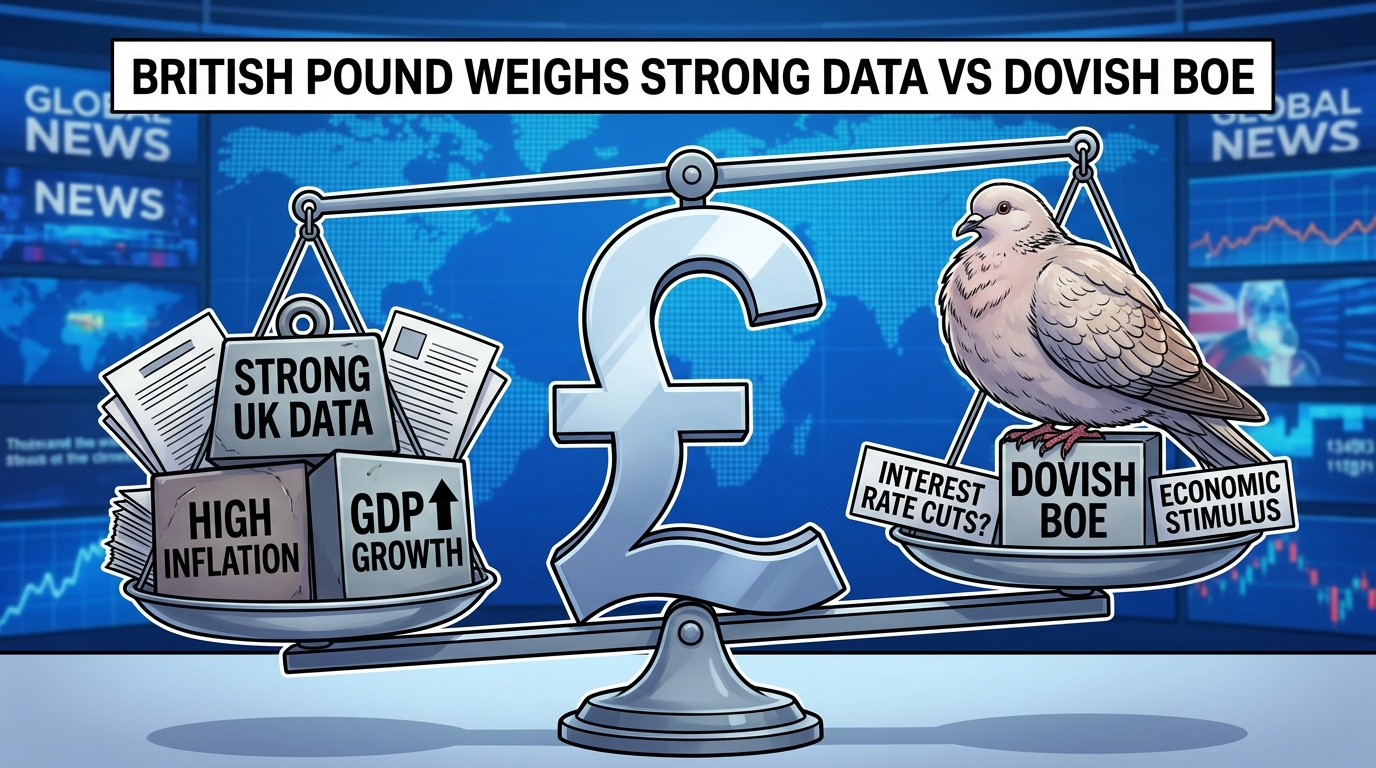
The British pound is caught between two competing forces as than-expected UK economic data clashes with expectations for a relatively dovish Bank of England (BoE). The mixed signals are creating uncertainty for GBP traders with economic resilience supporting the currency while expectations for monetary policy continue to weigh on sentiment.
Recent UK data has provided some encouragement for the pound. Stronger economic figures can suggest that domestic demand remains more resilient than previously expected. This could reduce the urgency for the BoE to deliver interest-rate cuts.
However the banks policy outlook remains an important obstacle for sterling. If policymakers continue to focus on inflation pressures, slower growth and risks to the labor market investors may still expect interest rates to move lower.
This contrast between data and monetary policy expectations is likely to keep the British pound sensitive to upcoming releases.
Strong UK Data Supports Sterling
One of the factors helping the pound is the resilience shown by recent UK economic indicators. Strong data can improve expectations for growth and reduce concerns about a sharp slowdown.
For currency markets stronger economic activity can also influence expectations for interest rates. If the economy performs better than anticipated the BoE may have reason to cut rates quickly.
That can provide support for GBP against currencies. However one strong data release does not necessarily change the economic picture. Traders will want to see whether the improvement continues across employment, wages, consumer spending and inflation.
A sustained improvement would be more meaningful than a positive reading.
Dovish BoE Expectations Remain a Headwind
Despite data the BoEs cautious stance remains important for the pound. Policymakers have to balance growth against inflation and financial conditions.
If inflation continues to move to the central banks target policymakers could have greater flexibility to reduce interest rates. Lower rates generally make a currency less attractive because investors may receive returns from sterling-denominated assets.
This creates a challenge for GBP bulls.
Even if UK economic data remains firm the pound could struggle to extend gains if markets believe the BoE is still preparing for monetary easing.
As a result traders are closely watching central bank communication alongside releases.
GBP Traders Focus on Interest-Rate Expectations
The issue for the pound is not simply whether UK data is strong or weak. The bigger question is how that data changes expectations for BoE policy.
If stronger economic figures push investors to reduce expectations for rate cuts sterling could gain momentum. UK government bond yields could rise as markets price an accommodative policy path potentially supporting the currency.
On the hand if policymakers continue to emphasize downside risks to growth and inflation remains contained traders may maintain expectations for additional rate reductions.
This could limit any recovery in GBP. The difference between market expectations and the BoEs actual policy signals will therefore remain a driver of sterling volatility.
Technical Outlook for the British Pound
From a perspective GBP pairs could remain vulnerable to sharp moves while traders assess the conflicting fundamental signals.
A sustained move above resistance levels would indicate that buyers are gaining confidence. Such a move could open the door to recovery particularly if UK economic releases remain supportive.
Conversely a failure to break higher could encourage sellers to return. A decline below support levels would strengthen the bearish technical outlook and could expose the pound to additional losses.
Traders should therefore monitor price action alongside developments rather than relying on either technical or fundamental analysis alone.
What Could Move GBP Next?
Upcoming UK economic releases will be particularly important. Traders will be watching inflation, employment, wage growth and economic activity for clues about the BoEs steps.
Inflation will remain one of the important indicators. A renewed increase in price pressures could reduce expectations for rate cuts and support sterling.
In contrast weaker inflation combined with economic growth could strengthen expectations for monetary easing and put pressure on GBP.
Global factors will also matter. The performance of the US dollar expectations for the Federal Reserve and broader risk sentiment can influence GBP/USD when UK-specific developments are unchanged.
British Pound Outlook
The British pound is entering a period in which strong economic data and a cautious BoE outlook are pulling the currency in directions. Stronger UK figures can support sterling by reducing expectations for rate cuts but a dovish central bank stance remains a significant headwind.
For traders the next major move in GBP may depend on whether economic resilience proves persistent to change BoE expectations.
If incoming data remains strong and markets begin pricing rate cuts the pound could find room to recover. If growth weakens or the BoE reinforces its stance sterling may remain under pressure.
For now the British pound is likely to remain highly sensitive, to releases, interest-rate expectations and central bank communication. Traders should watch these factors closely as the market searches for a direction.