Last Updated on September 29, 2026 by Deon
Pound Stabilizes Against US Dollar
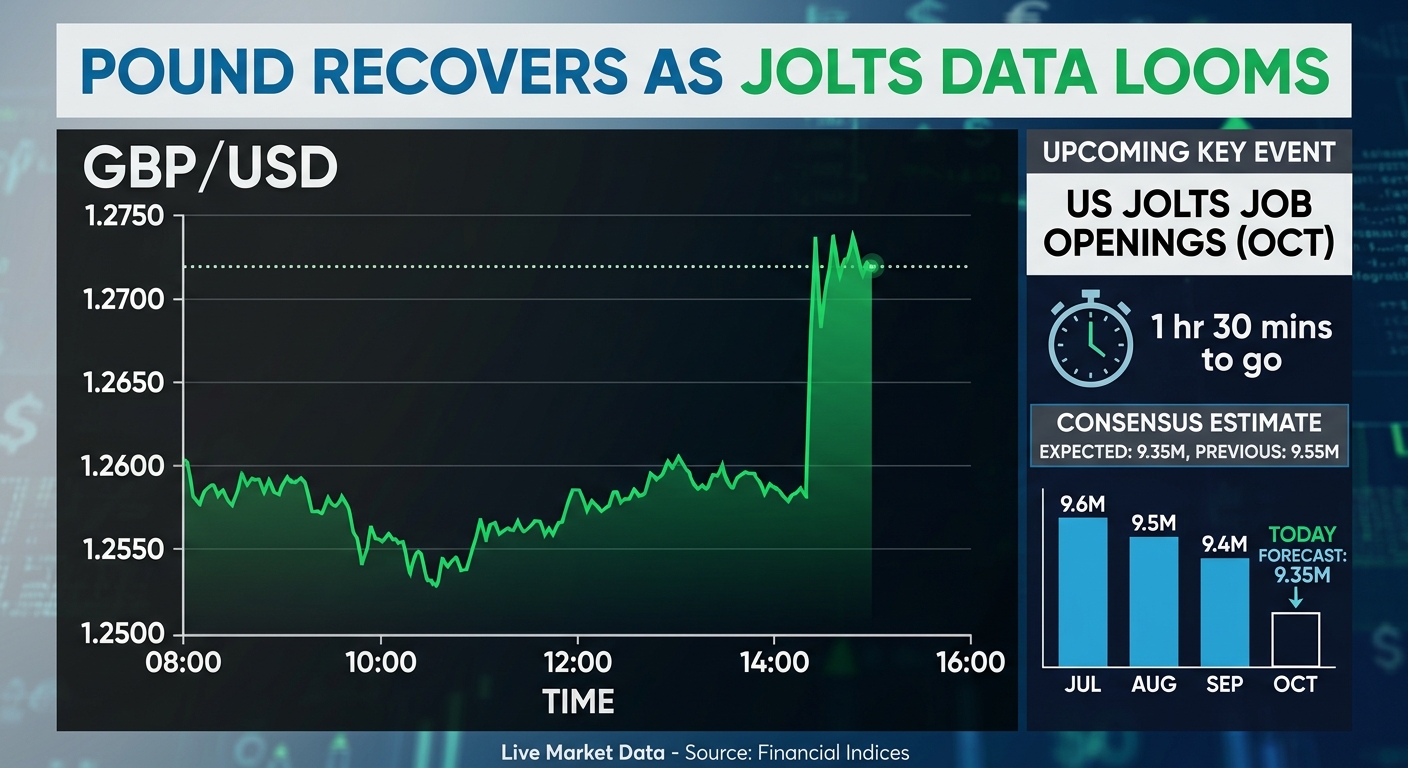
The British Pound appears to be recovering against the US Dollar after weakness. However the overall outlook for GBP/USD stays closely linked to US data and expectations about interest rates.
Traders are now focusing on the US Job Openings and Labor Turnover Survey, known as JOLTS. This data may give clues about the strength of the American labor market. The information is especially important because changes in labor demand can affect expectations for Federal Reserve policy and Treasury yields.
GBP/USD has recently been under pressure from US Treasury yields and stronger expectations for US interest-rate increases. At the time remarks from Bank of England officials have offered some support for the Pound.
US JOLTS Data in Focus
The JOLTS report is one of the main economic releases that forex traders watch closely. The report delivers information about job openings, hiring and turnover in the labor market.
A reading that is stronger than expected could reinforce the idea that the US economy remains resilient. This could support the US Dollar if investors foresee that the Federal Reserve will keep a policy stance for a longer period.
Conversely weaker data on job openings could lessen some of the pressure on GBP/USD if markets see the figures as proof of cooling US labor demand.
Market reaction will therefore depend not on the headline number but also on how the figures match expectations and what they suggest about future decisions by the Federal Reserve.
Higher US Yields Pressure GBP/USD
US Treasury yields continue to be a driver for the currency pair. Recent rises in longer‑term yields have helped strengthen the Dollar and have created headwinds for the Pound.
FXStreet reported that US Treasury yields were trading at levels and stronger US economic fundamentals were also backing the Dollar.
Higher US yields can make dollar‑denominated assets more appealing to investors. When this occurs demand for the US currency can rise, putting pressure on GBP/USD.
For traders the link between Treasury yields and the Dollar remains a part of the current market picture.
Bank of England Policy Supports Sterling
The Bank of England offers another influence on the Pound. BoE Deputy Governor Dave Ramsden recently suggested that there might be a case for raising the Bank Rate if inflationary pressure keeps building. Ramsden was among the majority of policymakers who voted to keep rates at the latest meeting.
These comments can support the Pound because expectations of UK interest rates can raise the relative appeal of pound‑denominated assets.
However the outlook still depends on UK inflation, employment and economic‑growth data. If economic activity weakens a lot expectations about BoE policy could change.
UK Economy Remains Important
The Pound is also being influenced by worries about the UK’s performance. Recent analysis points to UK labor demand and slow private‑sector momentum as possible challenges for the Pound. At the time the US economy has shown more resilience creating a contrast between the two economies.
This difference matters for GBP/USD because currencies often react to changes in economic performance. If US data stays strong while UK activity slows the Dollar could keep an advantage. Conversely better UK data combined with signs of US growth could change interest‑rate expectations and give more support to GBP/USD.
GBP/USD Technical Picture
From a viewpoint GBP/USD stays below key moving‑average resistance. FXStreet’s latest analysis puts resistance near the 1.3410 to 1.3415 range, where the Bollinger middle band meets the 100‑day simple moving average. A move above this area would signal a change in the technical setup.
On the downside the 1.3175 area is seen as a support level near the lower Bollinger Band.
These levels can serve as reference points but technical levels should be looked at together with economic data and shifts in market expectations.
Dollar Strength Remains a Risk
The overall US Dollar trend is another factor for GBP/USD traders. The Dollar Index has recently stayed above the 101.00 level as US Treasury yields keep rising. FXStreet also pointed to JOLTS data and several Federal Reserve speeches as key events for the Dollar.
If US economic indicators stay strong and Fed officials keep a tone the Dollar could keep receiving support. This could make it harder, for GBP/USD to sustain a recovery.
However any signs of US growth or softer labor‑market conditions could shift the balance.
What Traders Should Watch
US JOLTS job openings: This is an indicator of labor‑market demand.
US Treasury yields: Higher yields can support the Dollar.
Federal Reserve commentary: Fresh guidance can shift rate expectations.
Bank of England policy: Inflation concerns could keep rate‑hike expectations
UK economic data: Growth and labor‑market figures remain important for Sterling.
GBP/USD technical levels: The 1.3410–1.3415 resistance zone and 1.3175 support are reference points.
GBP/USD Outlook
I think the British Pound is trying to recover after losses but the currency remains caught between two opposing forces. Expectations for Bank of England policy can provide support while elevated US Treasury yields and resilient American economic data continue to favor the US Dollar.
I expect that the upcoming JOLTS report could therefore be important for short‑term GBP/USD volatility. Strong US labor‑market data may reinforce Dollar demand while weaker figures could lead traders to reassess expectations for Federal Reserve policy.
For now I think traders are likely to monitor both US and UK developments closely. The combination of expectations Treasury yields, central‑bank guidance and technical levels will remain central to the Pounds next move.
FAQs
Why is the British Pound recovering?
I think Sterling has received some support from expectations that the Bank of England might consider policy if inflationary pressures increase.
Why is JOLTS important for GBP/USD?
I think JOLTS provides information about US job openings and labor demand which can influence expectations for Federal Reserve policy.
What is affecting GBP/USD currently?
I think US Treasury yields, Federal Reserve expectations Bank of England policy and UK economic conditions are among the factors.
What are the important GBP/USD technical levels?
I think recent FXStreet analysis identifies resistance around 1.3410–1.3415 and support, near 1.3175.
Can US data move the Pound?
I think yes. Strong or weak US economic data can significantly affect the Dollar. Consequently the GBP/USD exchange rate.