Last Updated on September 29, 2026 by Deon
DXY Approaches June High
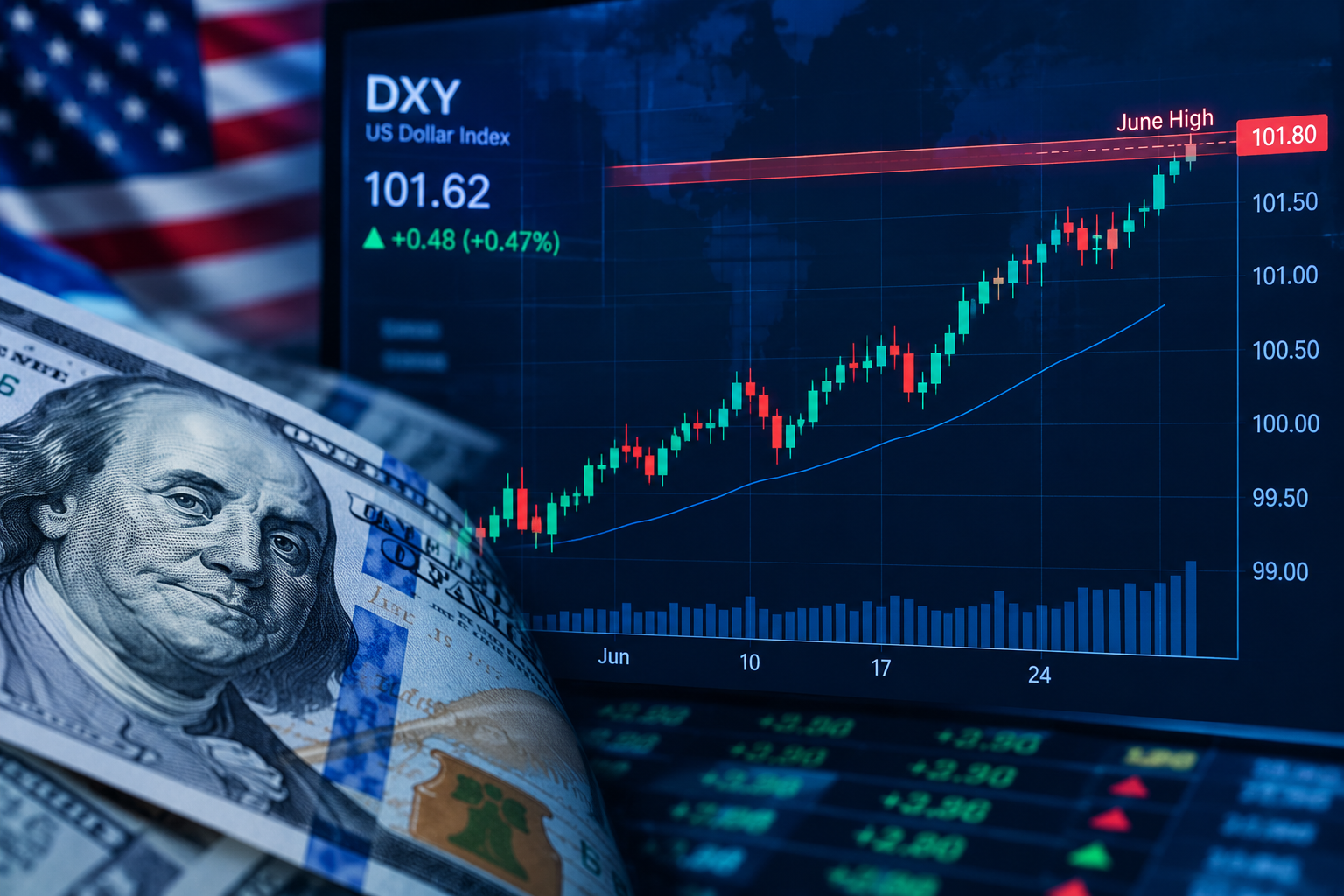
The US Dollar Index, known as DXY is climbing against major currencies. The index is nearing a technical level near 101.80, which is the high reached on June 24. Brown Brothers Harriman strategist Elias Haddad says that DXY is still backed by US economic growth and solid foreign demand for US securities.
The latest move comes as markets look at the future of US interest rates Treasury yields and economic activity. At the time other major central banks are tightening policy, which could limit how far DXY can extend its gains.
DXY Faces Resistance Near 101.80
The area near 101.80 is now a reference point for DXY. BBH notes that tightening by major central banks could reduce the gap between US policy and foreign monetary policy.
This means that if DXY stays above the June high it may meet resistance if markets keep pricing policy from other economies. However BBH also points to US growth outperformance and strong foreign appetite for US securities as factors that could support DXY.
The interaction between these forces could decide whether DXY stays below the June high or tries to set a trading range.
US Growth Supports the Dollar
US economic performance remains one of the reasons behind DXYs recent strength.
Stronger economic activity can lead to expectations of interest rates and Treasury yields. This can raise demand for US assets. Give support to DXY.
BBH has highlighted widening US‑G6 interest‑rate differentials and rising US real yields as key sources of support for DXY.
For currency traders this makes US economic data especially important. If upcoming figures keep showing resilience markets may keep expectations of US monetary policy.
JOLTS and Consumer Confidence in Focus
The BBH assessment comes as traders watch several US economic releases, such as the August JOLTS and the September Conference Board Consumer Confidence Index.
The JOLTS report gives information about labor demand and job openings. BBH expects the data to show labor demand after the August Nonfarm Payrolls report. The report will also give information about layoffs and wider labor‑market conditions.
Consumer confidence is another release because it can give clues about household views of jobs and the economy. BBH is especially watching the difference between consumers who see jobs as plentiful and those who think jobs are hard to find.
Fed Policy Remains Important
Federal Reserve policy keeps influencing DXY outlook. Recent market pricing and Fed officials comments have kept expectations of tightening in focus.
Earlier BBH commentary highlighted the US growth advantage. Changing interest‑rate differentials as factors supporting DXY.
Higher US interest rates can make dollar‑denominated assets more attractive especially when investors expect rates to stay high for a time.
However monetary‑policy expectations can shift quickly after inflation, employment and growth data. This creates a source of volatility for DXY.
Other Central Banks Could Limit Gains
DXYs strength is not happening alone. Several other major central banks are also dealing with inflation pressures and policy changes.
According to BBH tightening by central banks could limit how much policy can diverge between the Federal Reserve and its global counterparts. This could make it harder for DXY to keep a move above the 101.80 June high.
As a result traders may watch expectations closely across the United States, Europe, the United Kingdom, Japan and other major economies.
Treasury Demand Adds Support
Another factor BBH highlights is foreign demand for US securities.
International investors buying US Treasury securities and other dollar‑denominated assets can create demand for DXY. This can give support when differences between central‑bank policies are narrowing.
US Treasury yields are therefore a part of the broader DXY picture. Rising yields can pull capital toward US markets while falling yields can lessen that advantage depending on the global environment.
Technical Outlook for DXY
From a view the 101.80 June high is the key level BBH points to. A sustained move around this area would be important for traders looking at DXYs phase.
The broader market picture shows DXY trading above the 100 level. Reuters reported that the index had recently moved above its 100‑week moving average although recent candlestick patterns show some signs of weakening momentum.
This makes a technical backdrop: DXY remains high but resistance, near previous highs could become important if buying momentum slows.
What Could Move the Dollar Next?
Several factors could influence DXY in the term:
US economic data: Stronger growth and labor‑market figures could support the dollar.
Fed expectations: Changes in expectations for rate decisions may affect Treasury yields and USD demand.
Treasury yields: Higher yields can increase the attraction of US assets.
Central‑bank policy: Faster tightening elsewhere could reduce the US policy advantage.
Resistance: The 101.80 area remains an important reference point for DXY traders.
Final Outlook
I think DXY is approaching the 101.80 June high as US growth strength, Treasury yields and foreign demand for US securities continue to support the currency.
For traders upcoming US economic releases and changes in expectations will remain important. JOLTS, consumer confidence, Treasury yields and Federal Reserve commentary can all influence DXY volatility as the market tests the area around the June high.