Last Updated on September 30, 2026 by Deon
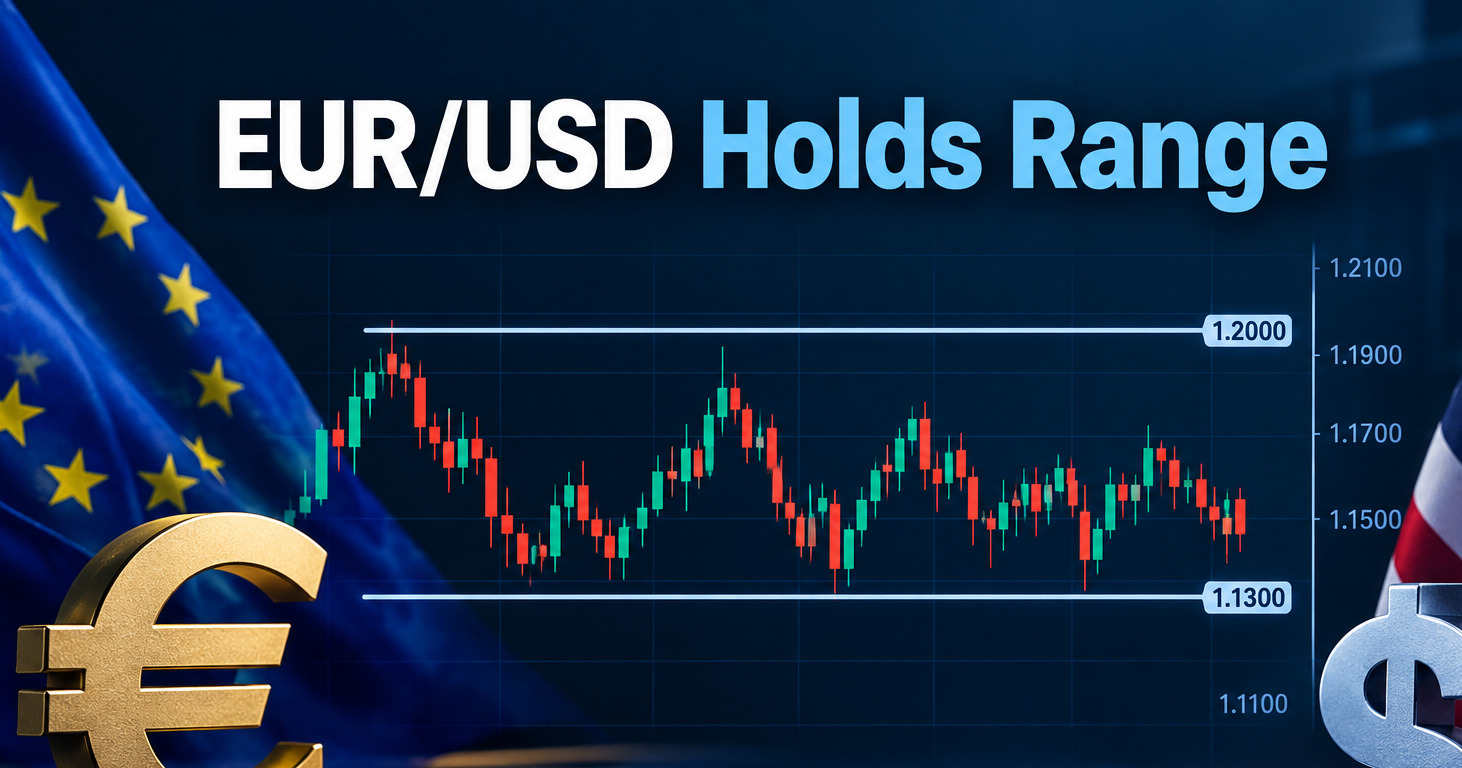
EUR/USD stays near the end of its yearly trading range as market participants rethink the future of the US Dollar. Deutsche Bank believes the currency pair may continue to trade within the 1.13 to 1.20 range of pushing lower. The bank still sees a year-end target of 1.17 for EUR/USD. It points to global growth limited extra support from US interest rates and a high level of risk premium already baked into energy markets.
The Euro has been under pressure due to strength in the US Dollar. EUR/USD has moved toward the 1.13 level, which’s the lower boundary of its annual range. This makes the 1.13 area a critical point for traders to watch.
EUR/USD Nears Key Support
EUR/USD is now trading close to the bottom of its 1.13 to 1.20 range. This has sparked attention on whether the pair will break below support or hold and stay within the range. FXStreet recently highlighted 1.1300 as a support level global economic . A clear break below that level could change the picture.. If EUR/USD stays above 1.1300 the range structure remains intact.
The recent drop in EUR/USD has mainly reflected an US Dollar. However Deutsche Bank says the current environment may not offer extra momentum for a sustained Dollar rally.
Dollar Strength Faces New Questions
The US Dollar has gained strength on expectations that the Federal Reserve will keep policy tight. Higher US Treasury yields have also boosted demand for Dollar assets.. Deutsche Bank believes markets may already be pricing in much of the expected Fed tightening. The bank adds that any further rate hikes could come through term premiums rather than increased expectations for short-term rates. Historically higher term premiums have not always led to Dollar gains. This raises the question: can the US Dollar keep rising after such a move?
Global Growth Remains a Factor
Deutsche Bank also emphasizes the resilience of global economic growth. If the global economy stays strong demand for the Euro and major currencies could improve. Stronger global activity may reduce the US Dollars appeal as investors look to diversify. For EUR/USD global growth matters because currency values depend not on interest rate gaps but also on expectations for economic activity and capital flows.
Energy Prices Add Complexity
Energy prices remain a factor for both the Eurozone and the United States. Oil prices have surged amid tensions in the Middle East. That adds inflation worries. Higher energy costs can hurt household spending and economic growth while pushing inflation higher. For banks this creates a tough situation. Higher inflation may call for policy.. Weaker growth may suggest caution.
Deutsche Bank believes much of the risk premium linked to energy prices may already be reflected in markets. If energy prices stabilize the impact on inflation expectations could lessen. That might reduce support for Dollar strength.
Federal Reserve Policy in Focus
US policy continues to be a major driver of EUR/USD. The Federal Reserve raised interest rates by 25 basis points in September. Market participants are now weighing the chance of another increase. Recent comments from New York Fed President John Williams have added to the conversation. He said there is no need for urgency after the rate hike. Markets are now watching US inflation and jobs data to see what the Fed will do next.
The upcoming Personal Consumption Expenditures (PCE) Price Index ISM Manufacturing PMI and Nonfarm Payrolls report could all affect expectations for US interest rates. That in turn could influence the US Dollar.
Eurozone Data Also Matters
EUR/USD is not shaped by US data. Economic indicators and inflation in the Eurozone also play a role. Higher energy prices have increased inflation risks in Europe. At the time weaker growth could challenge the region’s economy. This gives the European Central Bank a balancing act. If Eurozone inflation stays high expectations for ECB policy could support the Euro.. Signs of weak economic activity could limit that support.
Key EUR/USD Levels
From a standpoint the 1.1300 level is important. FXStreet also sees 1.1270 as support below 1.1300. Meanwhile 1.1410 is a resistance level. A sustained move below 1.1300 could shift focus to 1.1270. Possibly signal deeper losses. On the hand a rise above 1.1410 could show that selling pressure is easing. It could also open the door to levels.
These levels should be considered with the picture in mind. They are not useful alone.
What Traders Should Watch
The next big moves in EUR/USD will likely depend on US inflation, jobs data, Treasury yields and central bank signals. A than-expected US economic report could boost expectations for more Fed tightening. That would support the US Dollar. Weaker data could reduce those expectations. Ease pressure on EUR/USD. At the time Eurozone inflation data and ECB communication could affect the Euro side of the pair.
For now Deutsche Bank thinks the 1.13 to 1.20 range is still relevant. It does not expect EUR/USD to break lower immediately.
EUR/USD remains near the end of its yearly range. Traders are weighing whether the recent Dollar rally can continue. Deutsche Bank expects the pair to stay within the 1.13 to 1.20 range. It still forecasts a year-end level of 1.17. The bank cites global growth, limited upside for the Dollar from Fed policy and a high level of energy risk premium already priced in.
The 1.1300 and 1.1270 levels are support areas. The 1.1410 level is a resistance point. US PCE inflation, jobs data, Treasury yields and ECB developments are likely to be the key drivers, for EUR/USD.