
Last Updated on February 20, 2026 by Deon
Gold Trades in a Tight Range
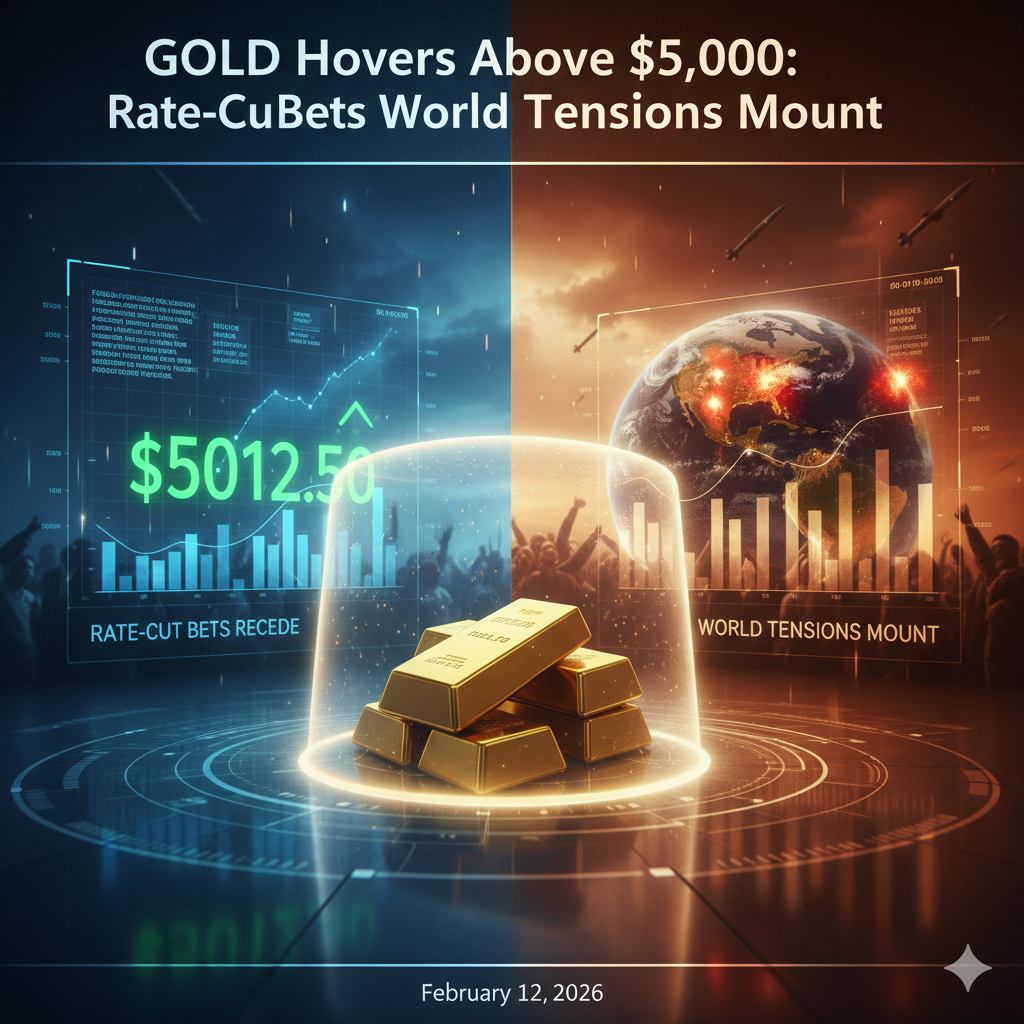
Gold prices were steady on Thursday, holding above the key $5,000-mark as investors weighed robust US economic data against growing geopolitical risks. As of publication, XAU/USD was hovering not far from $5,060 while continuing to remain within the bounds of $5,000 and $5,100 for this week.
The sidewise move in stocks suggests a market unsure what to make of the latest batch of reading for traders awaiting clearer signals on interest rates and events around the globe.
Strong U.S. Jobs Data Tempers Rate-Cut Bets
New numbers from the US Bureau of Labor Statistics indicated that the American job market is still holding strong. Nonfarm Payrolls increased by 130k in January, well above the consensus of 70k and it represented the biggest monthly gain since late 2014.
Meanwhile, the unemployment rate declined to 4.3% from 4.4%, a sign of ongoing health in the labor market.
These numbers have diminished prospects for an early interest rate cut by the Federal Reserve. So with the economy still performing well, they have less cause to keep borrowing costs a bit higher a bit longer.
Gold’s Problem? Rates Are Rising.
Gold does not pay interest and often suffers when interest rates remain high. WhenBonds pays more than savings accounts Some investors turn away from precious metals.
As a result, the robust employment report has generated slight headwinds for gold prices and has contained their upside in the near term.
Yet this has been counterbalanced somewhat by slack USD and bond yields.
Gold Prices by Weaker Dollar
Even the solid employment data were insufficient to give the US Dollar serious support. The Dollar Index (DXY) last sat near 96.80- close to its lowest in a week.
A weaker dollar makes gold less expensive for foreign buyers, which helps support demand and avert steep price declines.
This has offered solid support to gold around current levels.
Fed Signals Caution on Rate Cuts New signals from Federal Reserve officials that they may soon cut interest rates reflect the central bank’s balancing act.
Comments from recent Federal Reserve officials have added to the sense of “wait and see.”
Kansas City Fed President Jeffrey Schmid cautioned that reducing rates too soon could sustain inflation. He stressed the importance of keeping policy tight as long as inflation is near 3%.
For her part, the Cleveland Fed’s Hammack noted that current interest rates are close to neutral and not putting a big enough damper on the economy. It’s not time to change policy at this point.”
Taken together, these comments suggest a wary central bank that is not about to rush ahead with rate cuts.
Markets Still See Cuts Later in 2026
Despite the strong data of late, markets continue to expect rate cuts to come later this year. Futures pricing currently suggests that investors anticipate around 50 basis points of easing in 2026.
The first potential reduction may be in the June–July quarter. Investors are now looking toward the next round of inflation numbers, including Tuesday’s US Consumer Price Index (CPI) report, for fresh leads.
Safe-Haven Demand Remains Supported by Geopolitical Risks
Outside of economic explanations, world events are still impacting gold prices.
US-Iran tensions continue to fester. Do sources believe the US would send more troops back to the Middle East if nuclear talks collapsed?
These developments contribute to the instability and risk within financial markets. Gold is heavily used as a safe-haven asset in such cases as it supports the price from falling too fast.
Implications for Gold in the Short-term
With the economy and geopolitics sending mixed signals, gold is likely to keep itself entrenched in a consolidation phase for the time being.
The downside, however, is limited by diminishing expectations for early rate cuts. At the same time, however, global tensions and a weaker dollar are providing solid support.
So even when more data is available or some major events hit the market to change sentiment, we may keep on trading within the boundary of between $5000 and $5100.
Final Conclusion, the Market That Waits for a Sign.
Gold is pretty stable now – it’s the market waiting, watching. Investors are cautiously weighing robust economic data against growing geopolitical risks.
In the weeks ahead, the inflation data as well as signals from Fed policymakers and global events could decide whether gold moves higher or lower. Up till then, spill over trading should continue to dominate the precious metals market.