Last Updated on October 7, 2026 by Deon
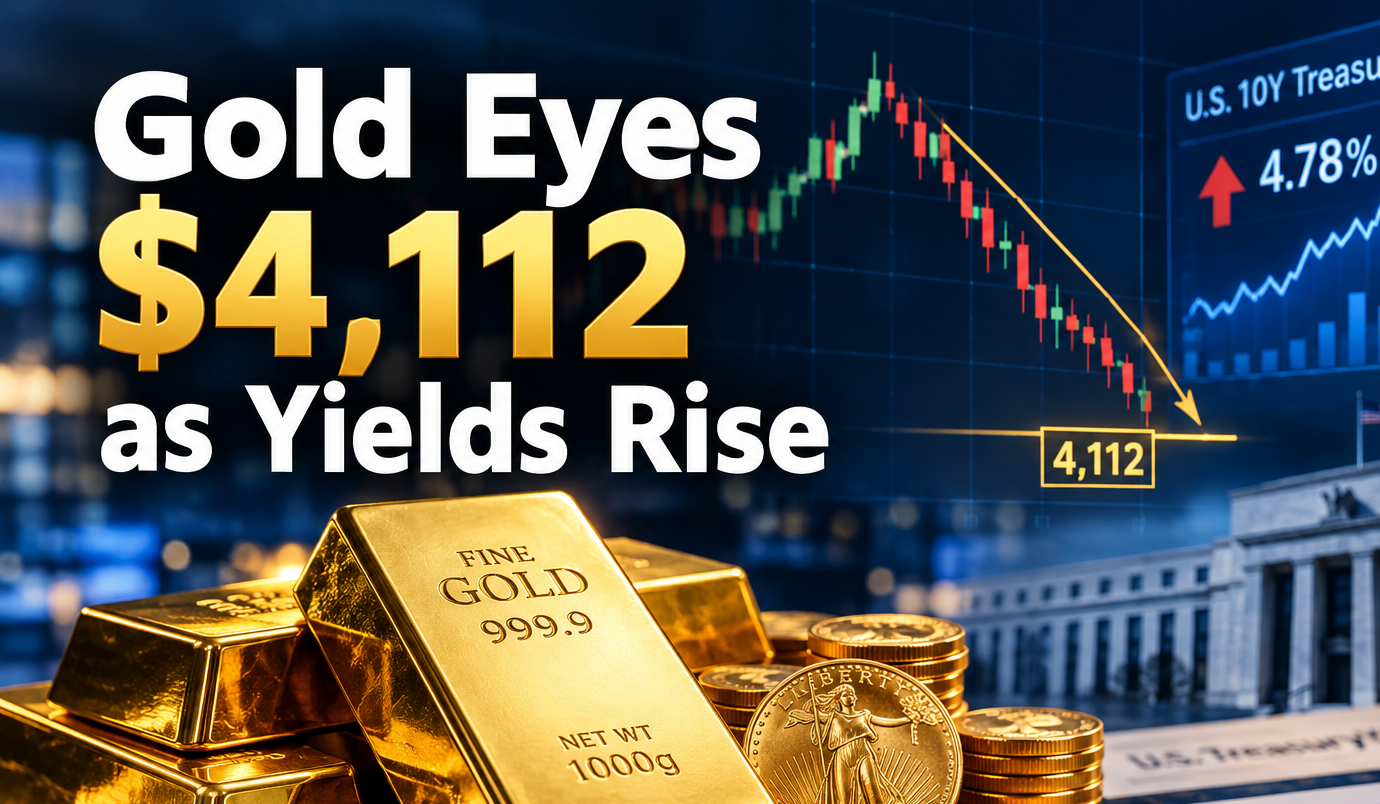
Gold prices are facing pressure as traders weigh strong physical demand from China against rising US Treasury yields and expectations for tighter Federal Reserve policy. XAU/USD is trying to stabilize near the $4,100 level with $4,112 emerging as a short-term reference point for market participants.
The precious metal has struggled to rebuild momentum after a drop. Higher borrowing costs and a stronger US Dollar have made the environment more challenging for gold. At the time demand from Asian markets, especially China is helping to cushion the downside.
Gold Finds Support Near $4,100
The $4,100 area has become a support zone for gold Buyers have stepped in at this level preventing declines so far. This zone is drawing interest from traders who see it as a floor.
A sustained recovery above $4,112 could signal that short-term selling pressure is easing. However gold would need buying interest to confirm a meaningful bullish move. Without that the market may remain range-bound.
If sellers regain control and push XAU/USD below $4,100 traders could shift focus to support levels. A break below this area might open the door to deeper losses with the next psychological support at $4,000 potentially attracting attention.
China Demand Supports Gold
Physical demand from China is playing a role in supporting gold prices. As one of the world’s gold markets strong buying from China provides a counterbalance to pressure from financial markets.
Chinese demand is robust because gold is used for both investment and jewelry. This dual purpose means that even when global investors pull back local buyers can step in and help prices.
Still strong physical demand does not always lead to a price rebound. The broader economic backdrop continues to influence XAU/USD more than any factor.
5.3% Treasury Yield Creates Pressure
US Treasury yields remain a dominant force in gold trading. The 10-year Treasury yield has moved toward the 5.3% mark creating headwind for gold.
Gold does not pay interest. When yields rise bonds become more attractive relative to non-yielding assets. Higher yields also tend to support the US Dollar, which adds another layer of pressure on gold.
For gold traders the direction of Treasury yields will be a signal. A continued rise could limit recovery chances. A drop in yields however could give buyers room to push prices higher.
Fed Rate Expectations Remain Important
Federal Reserve policy decisions continue to shape gold’s path. Market expectations about future rate moves are especially important as traders assess inflation trends and the sustainability of policy.
Higher rate expectations tend to strengthen the US Dollar and bond yields, both of which can weigh on gold. A hawkish stance from the Fed can make gold less appealing.
On the hand any shift toward a more dovish outlook—such as hints of rate cuts—could quickly improve sentiment. Traders will keep an eye on US data and Fed speeches for clues on the next move.
Gold Technical Outlook
From a standpoint the $4,112 level is crucial. A close above this level could encourage buyers to target resistance especially if Treasury yields begin to ease.
On the downside failure to hold $4,100 would weaken the near-term outlook. A clear break below this support could trigger selling and expose gold to deeper losses.
Now price action between $4,100 and $4,112 will remain critical. Traders may wait for a confirmed breakout before taking a directional stance.
Gold is caught in a tug-of-war. On one side strong physical demand from China is supporting prices. On the other rising Treasury yields and tight Federal Reserve expectations are weighing heavily.
The $4,112 level is a short-term reference. The $4,100 level remains a support zone.
A sustained break above $4,112 could improve the recovery outlook. A drop below $4,100 would likely increase pressure.
Until either level shows signs of breaking gold may continue to trade with caution. Investors will keep watching yields the US Dollar and Fed policy, for the move.