
Last Updated on October 15, 2026 by Deon
Australian Dollar Drops to One-Week Low
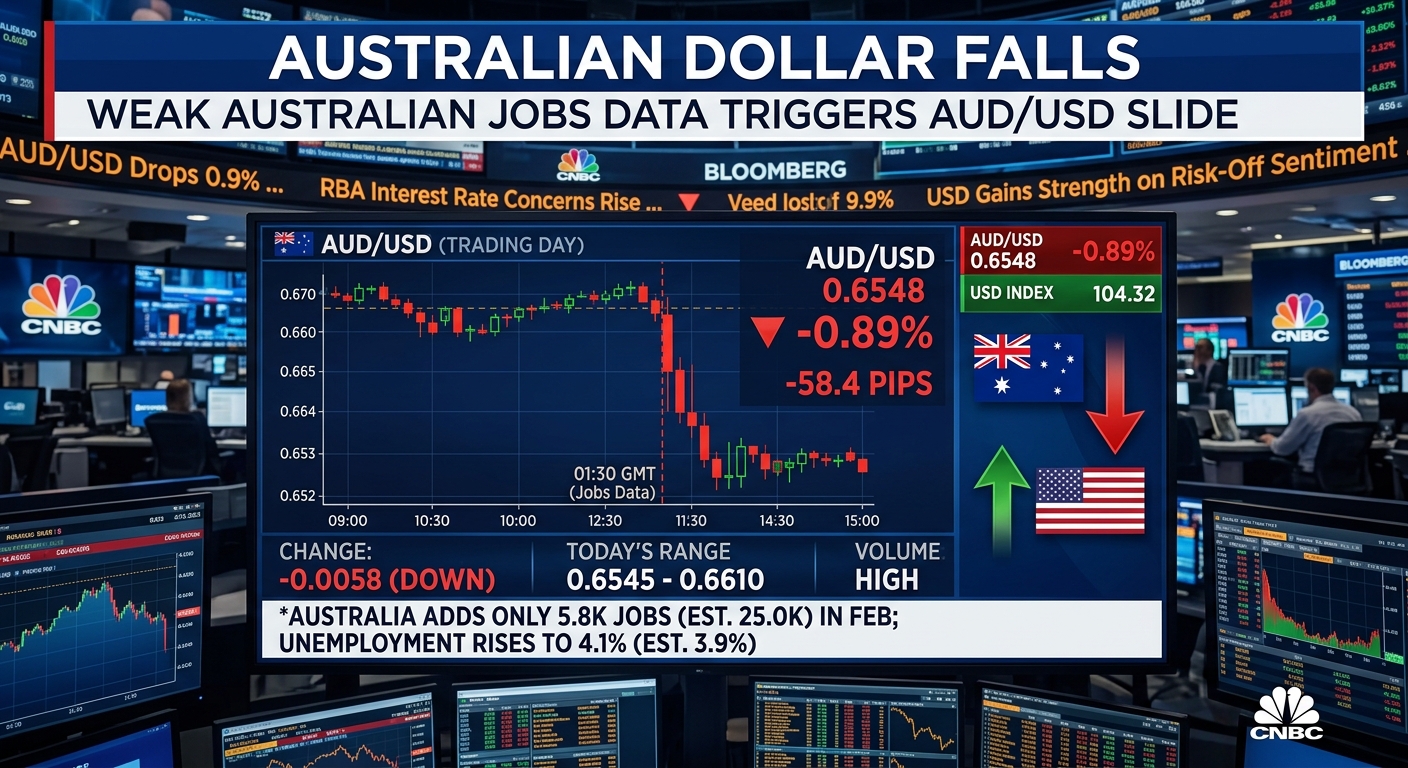
The Australian Dollar came under selling pressure on Thursday after poor Australian employment data pushed AUD/USD to a one-week low. The pair dropped below the mid-0.6900 area during the session as traders reacted to a big drop in employment and a small rise in the unemployment rate.
The Australian Dollars weakness comes after AUD/USD recently pulled back from levels above the 0.7000 psychological mark. However a weaker US Dollar is helping keep the pairs losses in check and stopping a bigger drop so far.
The latest employment figures have also lowered expectations for another interest-rate increase from the Reserve Bank of Australia (RBA) adding pressure on the Aussie.
Weak Australian Jobs Data Weighs on AUD
Australias labor market delivered a result in September. According to the Australian Bureau of Statistics the number of people working went down by 39.3K in September. This was a change from the previous months increase of 39.5K and was also much lower than what the market expected which was an increase of around 20K.
The unemployment rate also went up to 4.7% from 4.6% in August.
The mix of people working and a higher unemployment rate suggests some slowing in Australias labor market. For currency traders this is very important because employment conditions are one of the things the RBA looks at when making decisions about money policy.
A weaker labor market could make the central bank less likely to raise interest rates. That may put pressure on the Australian Dollar.
RBA Rate Hike Expectations Decline
The bad employment numbers have made another RBA rate hike US inflation report less likely in the markets.
Higher interest rates can help a currency by making domestic assets more attractive. So expectations for rate increases can reduce the demand for the currency.
The Australian Dollar had been helped by expectations about policy and general market confidence. The latest jobs report has changed that support.
The RBAs outlook is not the only thing affecting AUD/USD. The pair is also very sensitive to the US Dollar, market confidence, commodity prices and events in China.
Weak US Dollar Limits AUD/USD Losses
with the weak Australian data the US Dollar is also losing strength.
The Dollar dropped after it gave back some of its gains following the latest US Consumer Price Index report. The weaker Dollar has helped stop AUD/USD from falling
US Treasury yields have also gone down which is adding to the Dollars decline. Lower yields can make US assets less attractive. Encourage investors to reduce their long-Dollar positions.
This creates a situation for AUD/USD. Australian economic data is bad for the pair. The weakness in the US Dollar is acting against that.
As a result traders may need to wait for economic data before deciding if the current drop can turn into a bigger downward move.
US Inflation Keeps Fed Risks in Focus
The latest US inflation report is still a part of the market outlook. September CPI showed inflation pressure, which is increasing worries that the Federal Reserve may need to keep a strict policy. However the markets are still expecting about a 75% chance that the Fed will keep interest rates the same at its October meeting according to the FXStreet report.
At the time investors still believe the Federal Reserve could raise borrowing costs later in the year if inflation stays high.
This uncertainty is keeping the US Dollar unstable. If future US economic data strengthens the case for rates the Dollar could come back and put more pressure on AUD/USD. If the data is not strong the Dollar could get weaker again. Give the Australian Dollar some space to recover.
US. Fed Speech in Focus
The next big event that could affect AUD/USD is the US Producer Price Index (PPI).
The PPI report could change expectations about inflation and what the Federal Reserve will do. A stronger result may increase worries about inflation and support the US Dollar.
A weaker result could do the opposite. Possibly push Treasury yields down and weaken the Dollar.
Traders will also watch Federal Reserve Chair Kevin Warshs speech on Friday for hints about the banks future plans. His comments could influence US Dollar trading. Give a new reason for AUD/USD to move.
AUD/USD Technical Outlook
The technical view is still a little negative in the term.
AUD/USD is trading below the 100-period Simple Moving Average (SMA) on the four-hour chart, which shows that sellers still have some control.
The pair is also below the upward trend line around 0.6960. This area could now act as resistance if the pair tries to go up.
The 100-period SMA near 0.6986 is another resistance level, followed by the high around 0.7015.
On the side the main support area is near 0.6905. A break below this level could make the bearish technical view stronger. Cause more losses.
AUD/USD Outlook
The short-term outlook for AUD/USD is still cautious.
Weak Australian employment data has taken away some support for the Dollar and uncertainty about RBA policy may keep buyers from being active. At the time the weaker US Dollar is limiting the downside.
The reaction to US PPI data could decide the big direction. Strong US inflation data may make the Dollar stronger. Push AUD/USD toward its lower support levels. Weaker data could make the Dollar weaker. Help the pair move back up toward 0.6960 and 0.6986.
AUD/USD has fallen to a one-week low after Australias September employment report showed a drop of 39.3K in the number of people working and an increase in the unemployment rate to 4.7%. The bad numbers have lowered expectations for another RBA rate hike. Hurt the Australian Dollar.
Still the pairs losses are being held back by the US Dollar and falling US Treasury yields. Traders are now looking at US PPI data and Fed Chair Kevin Warshs speech for clues about interest-rate policy.
For now 0.6905 is a level to watch on the downside while 0.6960 to 0.6986 is a key area for a possible recovery. AUD/USD could stay unstable as the market balances Australian data, with changing US rate expectations.