Last Updated on September 26, 2026 by Deon
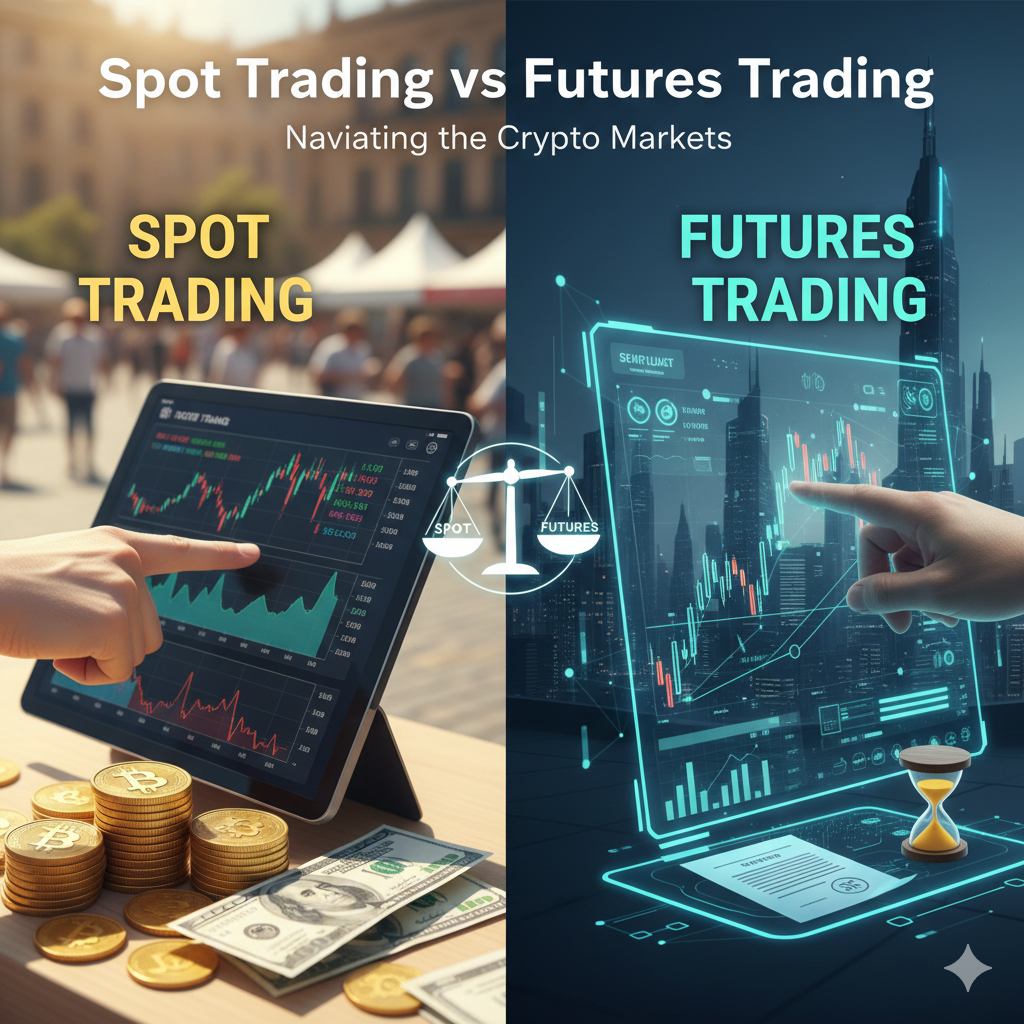
Think of trading not as a single, unchanging activity but as two distinct approaches with distinct metres: One type of trading is immediate and straightforward. The other one is long-term strategic trading, which requires foresight into future market developments. Spot trading vs Future trading are the fundamental ways to engage the markets. You must understand their individual characteristics to determine where your best fit lies.
Spot Trading in Real-time
Spot trading is commerce at its purest. Once you decide you want an asset, whether it’s shares of a company, Bitcoin, or gold, pay its current market price, and it becomes part of your collection. It is as straightforward as that: price, trade, and ownership!
Buy-and-hold investing and easy speculation are appealing forms of trading, particularly because their transparency allows direct ownership without expiration dates or complex contract terms that can cause unnecessary difficulty. It is where many begin their investment journey due to its ease of participation.
Futures Trading Is an Exciting Development
Futures trading does not involve the possession of something in the present but rather investing in the future. In futures trading, traders become contractually obligated to purchase or sell an asset at a specified price and at an agreed time in the future. The majority of traders do not want to accept 1,000 barrels of oil; rather, they terminate their position before the futures contract’s deadline and either profit or incur a loss depending on the difference between the price at that time and the current price.
This makes futures contracts an incredible field for speculation and risk management, providing traders with ample opportunities to protect and mitigate risk. Leverage enables traders to operate large positions with comparatively small amounts of capital, and the potential profits and losses are multiplied exponentially. Futures contracts are used by businesses to insure themselves against future price fluctuations by buying the commodities they require at the current price.
Spot Trading vs Future Trading: Comparative Analysis
To understand the clear concept of both, you also need to know how exactly they differ in practice.
Ownership
With spot trading, the asset you trade belongs solely to you. However, with futures contracts, it represents only an obligation or contractual promise, similar to owning your house outright versus having the option to purchase at an agreed-upon price next year.
Leverage
Futures offer high leverage, which magnifies gains or losses quickly, but spot trading with limited capital tends to be safer from a leverage perspective.
Time Horizon
Spot trades can last indefinitely; investors can hold assets for years without losing value. In contrast, futures contracts have an expiration date, which influences trading decisions as their expiration approaches.
Costs
Futures may have different fee structures, funding, or roll costs when maintaining future exposure over time.
Purpose
Long-term investors use spot investments, whilst short-term speculators and businesspeople who deal with financial risk use futures contracts.
Spot Trading vs Future Trading: Which Path Should You Follow?
Spot trading may be your ideal investment method if you believe an asset has long-term potential, prefer a lower learning curve, and focus exclusively on its value.
Futures offer a priceless opportunity to make a strategic move or bet on a price without owning a specific asset or using leverage. In futures trading, however, one must abide by the rules of risk management, i.e., maintaining sufficient margin and never investing more than one can afford to lose.
Final Remarks
Spot trading entails participation and direct ownership; futures trading involves prediction and strategic positioning. There is no single right answer when it comes to investing; each tool serves different functions. You can also take guidance from the most reliable trade platform, Neuron Markets, according to your plans. You will also need to understand that your specific financial targets, proper risk management, and time commitment are the actual investments. So, a clear, thorough knowledge of trade differences and an action plan accordingly are the basic elements of a successful career.
Frequently Asked Question
What is the main difference in asset ownership between spot trading and futures trading?
In spot trading, you take direct, immediate ownership of the asset and can hold it indefinitely. In futures trading, you do not own the underlying asset; instead, you enter a contractual obligation to buy or sell the asset at a specified price on a set future date.
How do leverage and risk differ between spot and futures trading?
Futures trading utilizes high leverage, allowing traders to control large positions with small capital, which exponentially multiplies both potential profits and losses. Spot trading relies on limited or no leverage, making it a safer option with lower financial exposure for long-term investors.
Which trading method is best suited for long-term investors vs. short-term speculators?
Spot trading is ideal for long-term investors who want to hold assets for years without expiration dates or rolling fees. Futures trading is preferred by short-term speculators trading on price direction and businesses seeking to hedge against future market price volatility.