Last Updated on October 17, 2026 by Deon
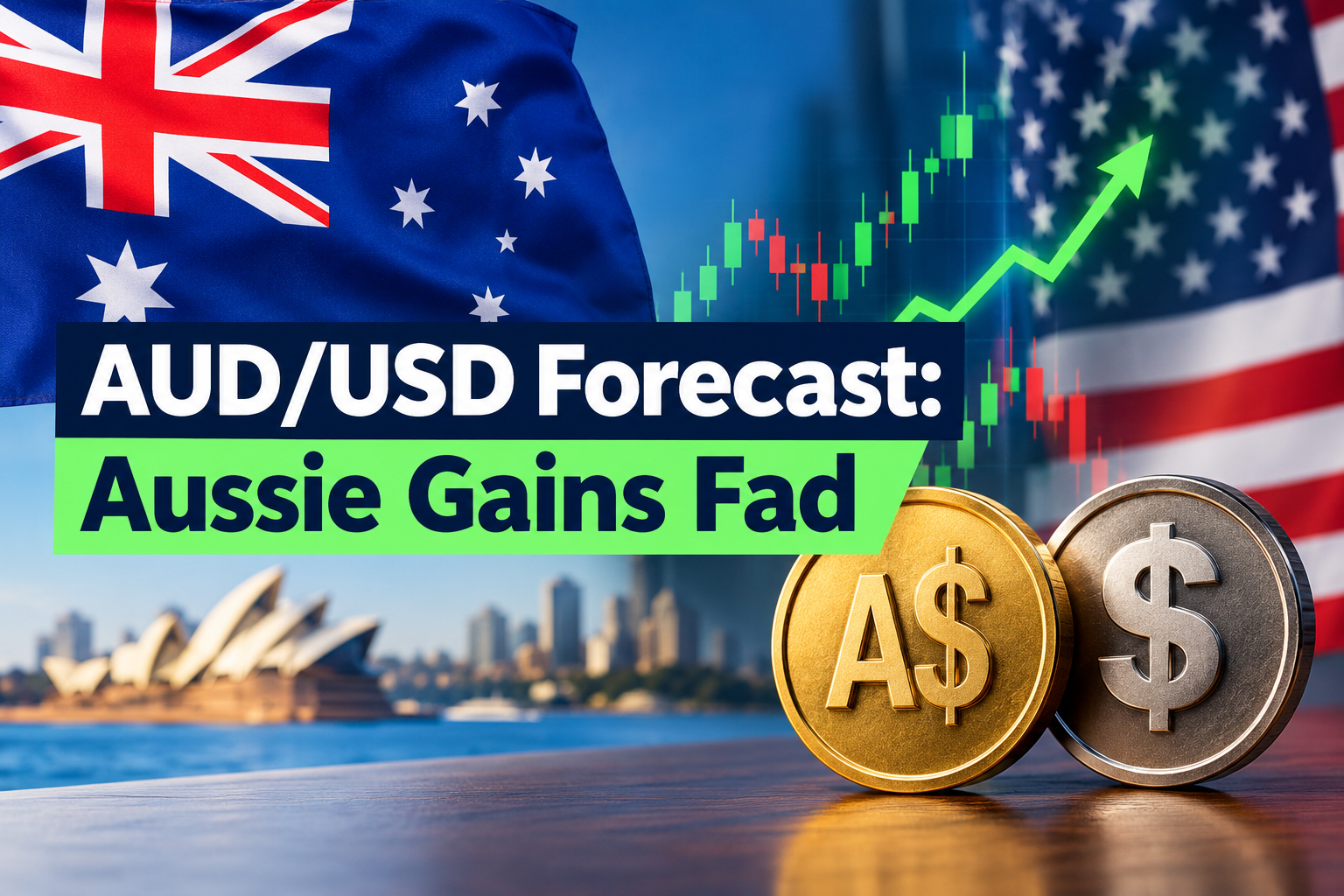
AUD/USD Struggles to Extend Recovery
The Australian Dollar is having trouble extending its recovery against the US Dollar because the Greenback is steadying and expectations for another Reserve Bank of Australia rate increase are fading.
AUD/USD was trading near 0.6941 after hitting an intraday close to 0.6967. After that advance AUD/USD stayed on a path toward a weekly decline.
AUD/USD is being pulled in directions. On one side a softer US Dollar has given some support to the Australian Dollar. On the side stronger US inflation data and expectations of another Federal Reserve rate hike are helping the Greenback recover.
This mix has kept AUD/USD below its highs and capped the strength of the Australian Dollar.
US Dollar Finds Support
The US Dollar Index was trading at 101.90 after briefly dropping to 101.58, its lowest level in two weeks.
The Greenback had recently risen to an 18‑month high near 102.94 before pulling as Treasury yields fell and investors shifted to government bonds during a sell‑off in equities.
However the Dollar has gained some ground again as investors reconsider US policy.
Hotter‑than‑expected US inflation and steady consumer spending keep the expectation alive that the Federal Reserve might raise interest rates again before year‑end.
Although markets mainly expect the Fed to keep rates at its October 27‑28 meeting attention has moved to December. Market pricing shows about a 90% chance of a December rate hike.
This expectation is helping restrain pressure on the US Dollar and creating a headwind against AUD/USD.
Treasury Yields Add Pressure
US Treasury yields are another factor for AUD/USD. The benchmark 10‑year US Treasury yield moved back toward 5.11% after dropping to 5.04% the day before.
Higher Treasury yields can support the US Dollar by making US fixed‑income assets more appealing to investors. They can also reinforce the idea that the Federal Reserve will keep policy tight for longer.
For AUD/USD this means that even if the Dollar shows weakness rising yields could make it hard for AUD/USD to hold a strong upward move.
Weak Australian Jobs Data Hurts AUD
The Australian Dollar also faces pressure from economic data.
Australias latest employment report was weaker than expected. Employment fell by 39.3K in September while economists had expected a rise of about 20K. The unemployment rate stayed at 4.7%.
The disappointing employment figures have lowered expectations for another RBA rate increase.
Higher borrowing costs seem to be affecting hiring conditions making the environment more complex for policymakers. Markets now expect the RBA to keep rates at its November 2‑3 meeting.
The RBA has already implemented four rate increases this year making the latest employment data especially important for expectations about the stage of monetary policy.
RBA Still Keeps Tightening Option Open
Despite the jobs figures the RBA has not fully closed the door on further tightening.
September meeting minutes revealed that policymakers are still ready to raise rates if needed to hit their inflation and employment targets.
This means the Australian Dollar could still get support if upcoming economic data shows inflation or better labor‑market conditions.
The market will therefore watch inflation, employment and economic activity data closely for signs that the RBA may change its current stance.
AUD/USD Technical Outlook
From a trading perspective the 0.7000 psychological level stays an upside barrier for AUD/USD.
A steady move above 0.7000 could boost the recovery. Improve the short‑term technical outlook. Buyers may then target swing highs and other resistance areas.
On the downside the 0.6900 region is a psychological support area. A clear break below this level could lift selling pressure. Reveal lower support zones.
The 0.6940 area matters now because it shows where AUD/USD is trading after failing to hold its intraday highs.
Traders should watch whether AUD/USD can create lows above support or instead starts making lower highs, which would mean sellers are taking control again.
What Traders Should Watch
The AUD/USD outlook will stay closely linked to the gap, between US and Australian monetary‑policy expectations.
For the US Dollar traders will watch inflation, consumer spending and other economic indicators to look for signs that the Federal Reserve may keep tightening.
For the Australian Dollar, employment and inflation data are essential. Stronger Australian figures could bring back expectations for another RBA hike while ongoing weakness could keep rate-hike bets
Global risk sentiment is also key because the Australian Dollar is often affected by the market appetite for risk.
Outlook
The AUD/USD forecast stays cautious because the Australian Dollar is still struggling to push its recovery above 0.6940.
The US Dollar is gaining support from Treasury yields and expectations of another Federal Reserve rate increase later this year. At the time weak Australian employment data has lowered expectations for another immediate RBA hike.
A break above 0.7000 could boost the outlook while a move below 0.6900 would raise downside risks.
For now traders are likely to focus on US and Australian economic data, central bank expectations and Treasury yield movements before making a stronger directional decision.