Last Updated on October 17, 2026 by Deon
Fed Outlook Remains Hawkish
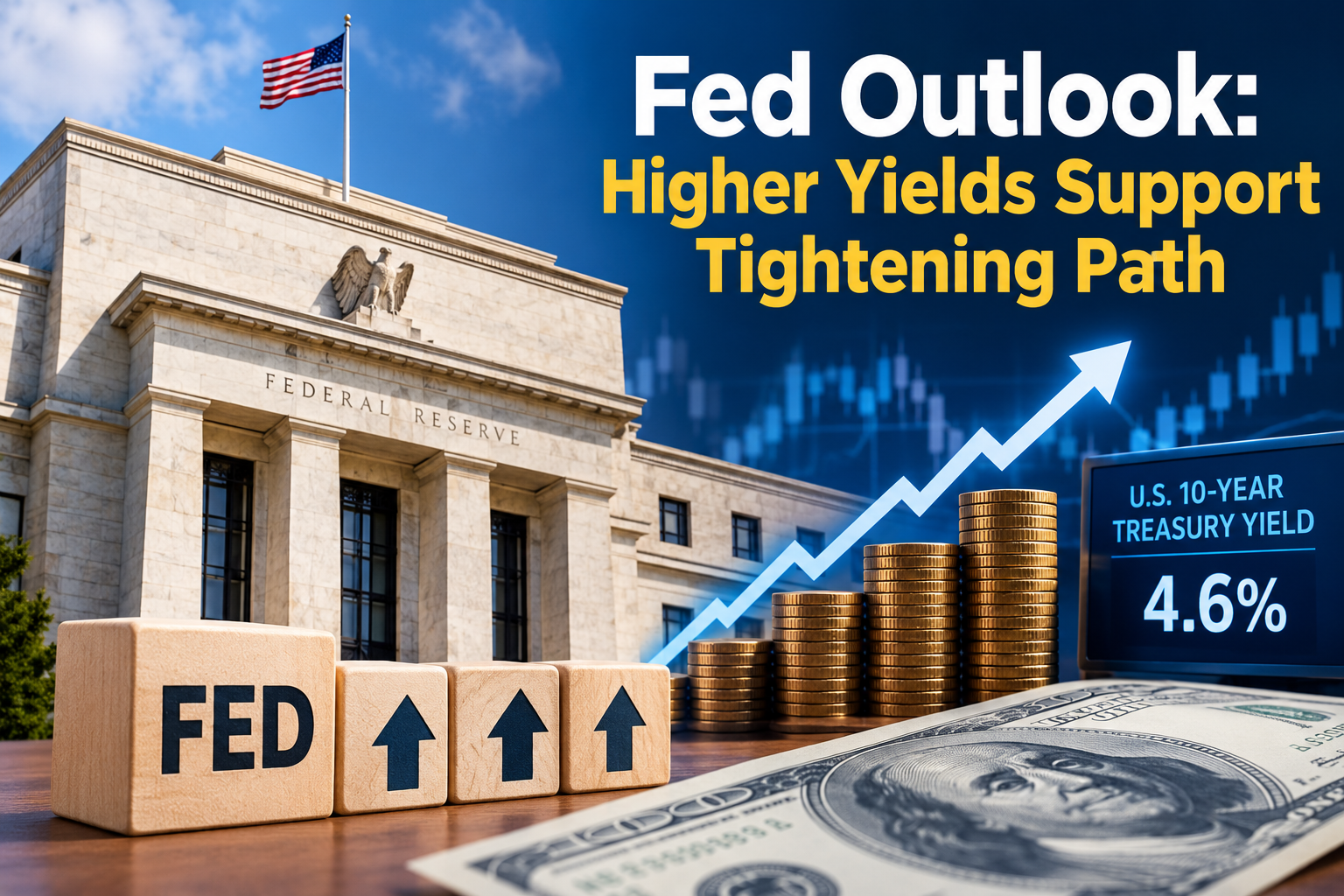
The Fed Outlook remains hawkish despite growing uncertainty around the timing of the Fed’s interest‑rate move. Nordea’s research team has kept its forecast for another Fed rate hike this year. An additional increase in 2027.
The bank’s view is based on two factors: US inflation remains above the Fed’s 2 % target while economic growth continues to show resilience. According to Nordea these conditions do not yet justify a shift toward an easier monetary‑policy stance.
The outlook comes as US Treasury yields remain elevated. Long‑term yields above 5 % are attracting attention because they can influence borrowing costs, financial conditions and expectations for future Fed policy.
Inflation Above the Fed’s Target
Inflation remains one of the biggest reasons behind Nordea’s expectations for additional Fed tightening.
The latest September Consumer Price Index showed inflation moving higher than continuing toward the Fed’s 2 % objective. The stronger inflation reading has made it more difficult for policymakers to declare victory over price pressures.
For the Fed persistent inflation creates a policy environment. Cutting rates quickly could allow inflation expectations to remain elevated while keeping policy restrictive for longer could eventually put more pressure on economic activity.
Nordea believes the current combination of above‑target inflation and solid growth means monetary policy may still need to become tighter.
Higher Treasury Yields Matter
US Treasury yields have moved higher particularly at the longer end of the curve. Nordea argues that these higher yields are not necessarily a sign that monetary policy has become sufficiently restrictive.
Instead the bank sees nominal economic growth and heavy demand for capital as important reasons behind elevated long‑term borrowing costs.
This distinction is important for markets. If higher yields are being driven by stronger economic conditions they may not deliver enough of a slowdown to eliminate the need for additional Fed tightening.
In words rising yields can reflect the same economic strength that encourages the Fed to maintain a hawkish stance.
Strong Growth Keeps Pressure on Policymakers
The US economy has remained more resilient than many investors expected. Strong economic activity gives the Fed flexibility to maintain restrictive policy without immediately creating a severe downturn.
Nordea therefore believes the current economic backdrop remains consistent with Fed rate increases.
The bank’s forecast calls for one hike in 2026 and another hike in 2027. It also sees risks tilted toward tightening if inflation remains persistent or growth continues to exceed expectations.
This outlook contrasts with the market’s changing expectations for the October meeting. Recent market pricing has reduced expectations for an October hike while expectations for a move remain considerably stronger.
October Decision in Focus
The timing of the next Fed move remains a major source of volatility across financial markets.
Recent comments from Fed Chair Kevin Warsh did not provide a signal about the October policy decision. He emphasized that upcoming meetings would be assessed based on the economic data rather than being predetermined.
As a result investors are increasingly focused on inflation, employment and growth indicators for clues about the Fed move.
Even if the Fed leaves rates at its next meeting Nordea’s view suggests that the broader tightening cycle may not be finished.
Impact on the US Dollar
A Fed tightening outlook could provide support to the US Dollar particularly if US interest rates remain higher than those of other major economies.
Higher yields can increase the attractiveness of Dollar‑denominated assets although currency movements also depend on growth, risk sentiment and monetary policy elsewhere.
If markets begin to price in Fed hikes for later this year or 2027 the Dollar could receive another boost.
However if inflation cools significantly or economic growth loses momentum expectations for tightening could weaken. That would potentially reduce support for the US currency.
Impact on Gold and Other Markets
The Fed’s policy outlook is also important for Gold. Higher interest rates and Treasury yields can weigh on the non‑yielding metal because investors have incentives to hold interest‑bearing assets.
Gold can nevertheless find support from factors, including geopolitical risks, central‑bank demand and concerns about financial or economic instability.
Stock markets are also sensitive to yields because rising borrowing costs can affect company valuations and investment decisions. Persistent increases in Treasury yields could therefore keep pressure, on assets.
Could reduce rate‑hike expectations
I notice that the Federal Reserves next moves will depend heavily on new economic data. Traders should watch inflation, employment, consumer spending and growth numbers for signs that the current strength’s still there or starting to fade.
I see that Nordea keeps a hawkish outlook expecting another rate hike this year and a second one in 2027. The bank says that higher long‑term yields do not cancel this forecast because those yields partly show an economy and big capital demand.
I think the key question for markets is whether inflation will stay above target while growth stays strong. If both of these conditions keep happening the case for a period of restrictive monetary policy could get stronger.
I understand that for traders this means the Feds tightening cycle is not finished just because a quick rate rise looks less likely. The overall policy outlook still depends on whether the US economy keeps producing inflation and growth to justify higher rates.