
Last Updated on October 3, 2026 by Deon
EUR/USD is still under pressure after falling for the straight week. The pair dropped to about 1.1215, the lowest since May 2025 before bouncing toward the 1.1280 level. The US Dollar remains strong. The latest US jobs data has lowered expectations for a rate hike by the Federal Reserve in October.
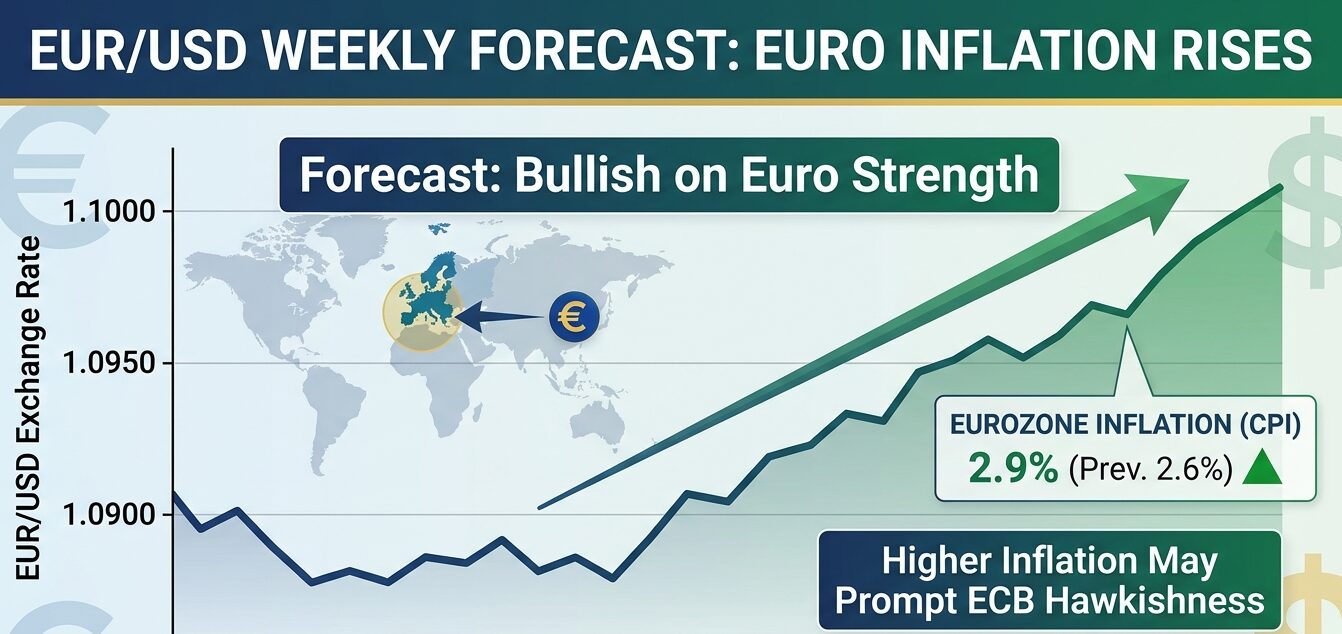
At the time Eurozone inflation rose more than expected in September. This adds complexity for the European Central Bank. Higher inflation may make ECB policymakers more cautious about easing their policy.
US Data Keeps the Dollar Supported
Recent US economic data shows results. Second-quarter GDP growth was revised upward to 2.2%. The September PCE Price Index stayed at 3.4% year over year down from the 3.7% after revisions.
However the US labor market showed signs of slowing. Nonfarm Payrolls grew by 29,000 in September far below the 90,000 expected. The unemployment rate rose to 4.2%. Annual wage growth slowed to 3%.
These weaker jobs numbers have reduced expectations for another Federal Reserve rate hike in October. Still high US Treasury yields and stronger growth expectations compared to major economies continue to support the US Dollar.
Eurozone Inflation Accelerates
Eurozone inflation surprised to the upside. The Harmonized Index of Consumer Prices jumped to 3.8% year over year in September up from 3.2% in August and above the 3.6% forecast.
Core inflation also rose to 2.5%. Higher inflation was seen across economies like France, Italy, Spain and Germany.
This rise in inflation could make the ECB more cautious about its policy.. An October rate hike is still considered unlikely. Market expectations for a December hike have increased.
The ECB now faces a choice between fighting inflation and supporting an economy dealing with high energy costs and geopolitical risks.
EUR/USD Technical Outlook
The technical outlook remains weak. On the chart EUR/USD is trading below its 20-day 100-day and 200-day simple moving averages, which are around 1.1462, 1.1513 and 1.1609. This shows the short-term trend is still under selling pressure.
The Relative Strength Index has recovered from oversold levels but it is still well below the neutral 50 mark. That means selling pressure has eased a little. No clear sign of a bullish reversal has appeared.
On the chart EUR/USD has moved below the 100-week SMA near 1.1360. The next major structural support is near the 200-week SMA at 1.1096.
A sustained move below that level could bring the 1.1000 level into focus.
Key Levels for EUR/USD Traders
Level | Significance
1.1000 | psychological support
1.1096 | 200-week SMA
1.1215 | Recent low
1.1280 | Recent trading area
1.1360 | 100-week SMA / resistance
1.1462 | 20-day SMA
1.1513 | 100-day SMA
A recovery above 1.1360 could improve the near-term technical picture. Continued weakness below 1.1215 may keep sellers focused on support levels.
Ecb Events Ahead
The coming week brings events that could affect EUR/USD volatility. US traders will watch the ISM Services PMI and the release of the FOMC meeting minutes.
The ECB will also publish its Monetary Policy Meeting Accounts. These releases could give clues about how policymakers see inflation, interest rates and economic risks.
For EUR/USD traders the main issue is the gap between US and Eurozone monetary policy expectations. With stronger European inflation the US Dollar is still benefiting from higher US interest rates and Treasury yields.
EUR/USD Weekly Outlook
EUR/USD starts the week with a technical structure.. The pair is showing some signs of stabilization after the recent drop. Stronger Eurozone inflation could support the euro if markets begin to expect ECB tightening.
Still the US Dollar remains supported by US yields and the belief that the US economy can keep outperforming its peers.
Traders will watch the 1.1215 support area first followed by 1.1096 and 1.1000. On the upside 1.1360 is a technical level. After that the focus shifts, to 1.1462 and 1.1513.
Overall upcoming Fed and ECB communications, inflation expectations, Treasury yields and Eurozone data will likely remain the drivers of EUR/USD price action.