Last Updated on January 1, 2026 by Deon
To enter forex market may feel like entering an exciting and lively marketplace, full of crowds, noise and tempting vendors offering different commodities and products. The difference is that in forex, every decision affects your money. But do you know ‘what mistakes should beginners avoid in forex?’ Here are the details that must be taken into consideration before starting the trade journey.
Thinking Trade: An Easy Shortcut to Quick Money
When you think about ‘what mistakes should beginners avoid in forex?’, you must remove all false ideas. Forex is not a lottery. Overnight riches make great headlines but don’t reflect most traders’ experience. Treat trading like any skill worth learning: one that requires practice, time and patience before seeing any instant wins. Otherwise, you will risk frustration and insecure bets in exchange.
Skipping a Trading Plan
Trading without a plan is like driving without navigational guidance. Having one will answer key questions such as ‘what will you trade, when will it start and end, how much risk will you take, and justification, etc. Get it out on paper. Review it after trades. The discipline of a plan keeps emotions from hijacking good instincts.
Ignoring Risk Management
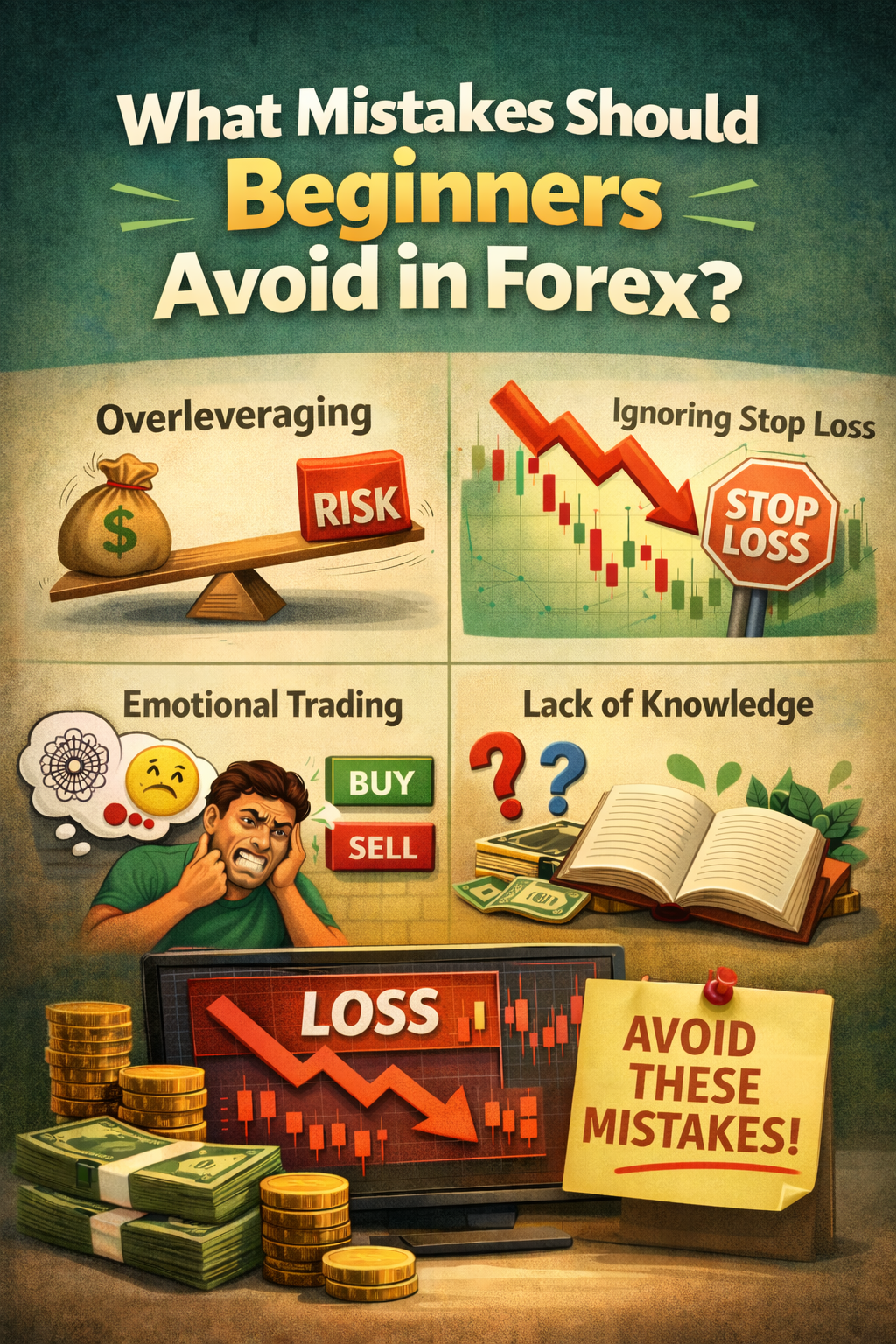
In the list of ‘what mistakes should beginners avoid in forex?’, this is probably the single biggest reason beginners lose money. Decide beforehand how much of your account you will risk per trade; commonly, 1–2%, use stop-loss orders, and never remove risk limits because a trade feels good. Protecting capital is the name of the game; without it, you can’t learn from your mistakes.
Overtrading and Using Too Much Leverage
More trades don’t equal more profit. Beginners often trade too frequently or turn up leverage to amplify returns. Leverage can magnify losses just as fast as gains. Start small. Focus on quality setups, not quantity.
Letting Emotions Overcome Your Decisions
Fear and greed can both play havoc with your trading. Fear can make you exit the list of winners too soon, while greed tempts you into doubling down on losing trades. Stick with your plan, set automatic stops as needed and accept that losses are part of life’s journey. Paper trading or maintaining a trade journal will build emotional safety over time.
Neglecting Education and Backtesting
When you only depend on tips and social media signals, the chance of risk increases. Instead, spend time to learn all the basic and advanced concepts like what drives currency pairs, how economic news influences markets, how technical tools work, etc., before risking real cash with any trading system or strategy. Backtest your strategies against historical data or demo accounts. That will provide as close an experience as possible before entering real trading markets.
Failing to Review Performance
Without recording trades, it will be hard to improve them. Make a simple logbook of entries, exits, rationale, outcomes and lessons learned over a month or so. That way, patterns may emerge that help drive real progress forward.