Last Updated on September 8, 2026 by Deon
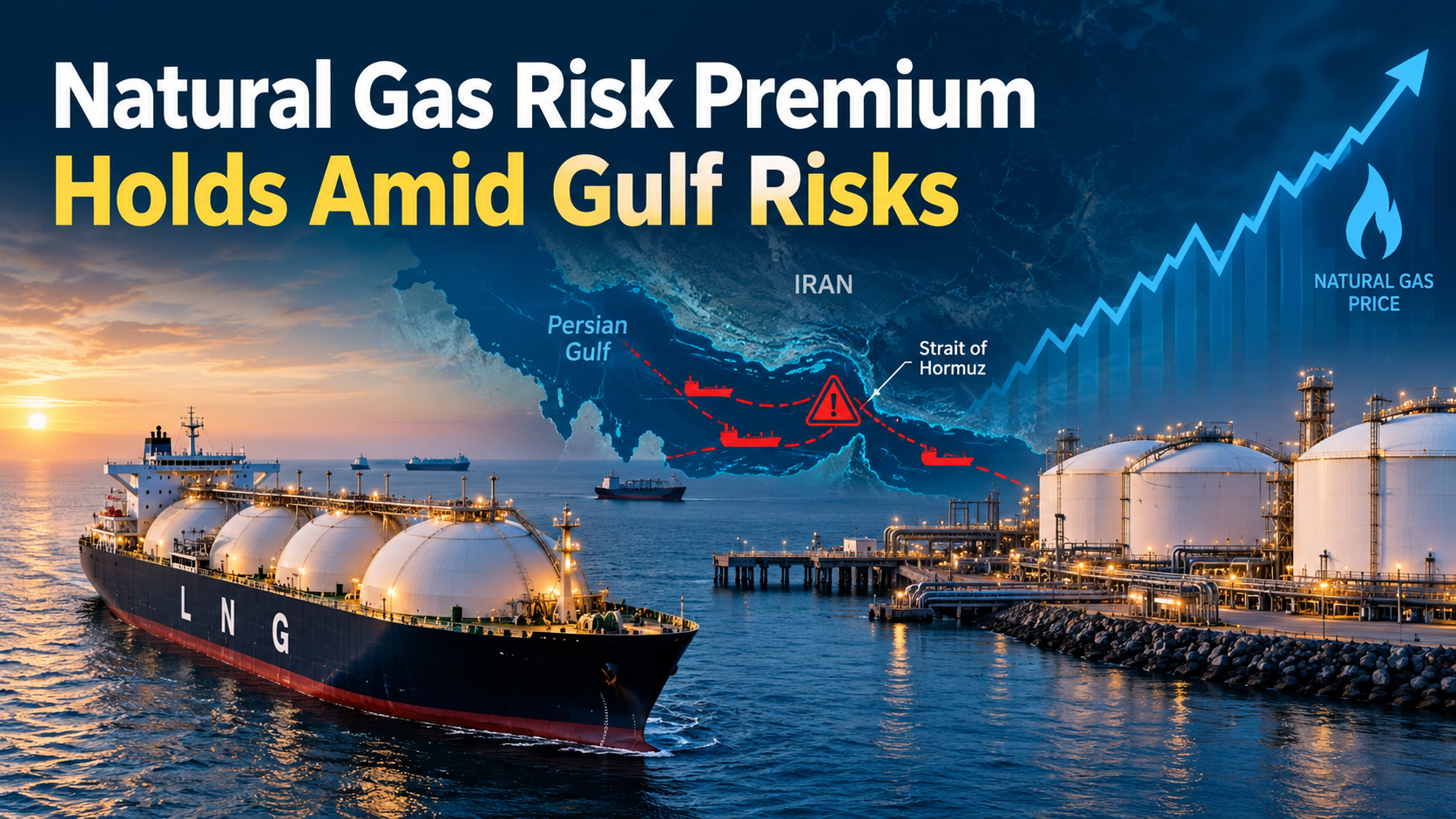
Natural Gas Risk Premium Remains
European natural gas prices keep facing upward pressure. This is because disruptions to Gulf LNG supplies are causing uncertainty. Winter is. Demand is expected to rise. Rabobank says the market is still holding a risk premium. The reason is that LNG flows through the Gulf remain disrupted. This creates a lasting effect on prices.
The situation is especially important for Europe. Storage levels there are still relatively low. If LNG shipments from the Gulf stay unreliable European buyers may have to fight for other supplies. That competition could push prices higher. Europe’s energy security depends on imports, and the current situation makes that uncertain.
Hormuz Disruptions Keep Gas Prices Supported
The Strait of Hormuz continues to be a focus. It is a route for LNG shipments. Rabobank’s Florence Schmit points out that the real issue is not whether a few ships can pass through now and then. The bigger concern is whether shipping can return to an consistent pattern. Without that stability the market stays nervous.
Unless the United States and Iran make progress in talks, LNG flows from the Gulf are unlikely to recover. This means Europe will keep competing for Atlantic LNG cargoes. Temporary improvements in shipping conditions might bring short-term price drops. Rabobank believes a lasting fall in prices needs a credible political agreement. That kind of agreement would restore confidence in Gulf shipping.
Low European Storage Adds to Market Risk
Gas storage is another factor driving prices. Winter is here, and demand will climb. Buyers need to fill storage tanks. If Gulf LNG supplies stay weak, Europe may have to rely on LNG from other parts of the world. That would increase competition for cargoes. Higher competition can keep prices elevated.
The combination of storage and uncertain imports makes the natural gas market very sensitive. Any new news about the Gulf could trigger price moves. Even small disruptions could have impacts. Market participants are watching closely.
Rabobanks Natural Gas Price Forecast
Rabobank expects European TTF natural gas prices to average around €60 per megawatt-hour in the quarter of 2026. For 2027 the bank’s base-case forecast is €42/MWh. The outlook could shift dramatically if infrastructure damage delays the recovery of Gulf LNG flows.
In that case TTF prices might stay in the €50–60/MWh range for much of 2027. This shows how powerful geopolitical events can be. A single political deal or conflict can reshape the energy market. Europe’s energy prices remain tied to developments.
US-Iran Talks Are Key
The natural gas market is paying attention to talks between the United States and Iran. If these negotiations lead to an agreement it would ease fears about shipping through Hormuz. That could help LNG flows from the Gulf return to normal. That would likely reduce the risk premium built into gas prices.
On the hand if talks stall or fail the supply situation stays uncertain. That would keep pressure on prices. The market is waiting for signals. Every update from the front matters.
What Could Happen Next?
Several factors will shape the moves in European natural gas prices:
Gulf Shipping Conditions
Any improvement in shipping through Hormuz could reduce supply concerns. Continued disruptions would keep the risk premium high.
European Storage
Storage levels will stay important as winter draws near. Lower-than-expected inventories could make the market more sensitive to supply problems.
LNG Competition
If Gulf supplies stay limited, European buyers may need to compete for LNG from Atlantic suppliers. Stronger competition could support prices.
Geopolitical Developments
US-Iran negotiations and other events around the Gulf remain risks. Any change could shift the market.
Natural Gas Market Outlook
The near-term outlook for natural gas remains cautious. Prices are supported by storage levels and uncertainty around Gulf LNG shipments. Temporary improvements in shipping could lead to short-term price declines. Rabobank believes the broader risk premium is likely to stay until there is more confidence that Gulf LNG exports can return to normal.
For 2027 the €42/MWh base case gives a moderate picture. Prices could stay much higher if infrastructure damage delays supply recovery. The market is not just reacting to weather or demand. It is responding to a web of logistical risks.
Key Takeaways
European natural gas prices remain supported by Gulf supply risks.
European storage is increasing market sensitivity.
Hormuz disruptions are limiting confidence in LNG flows.
Rabobank sees TTF averaging €60/MWh in Q4 2026.
The 2027 base-case forecast is €42/MWh.
Infrastructure damage could keep TTF around €50–60/MWh.
US-Iran negotiations remain critical for the longer-term outlook.
European natural gas prices continue to carry a risk premium. That is because Gulf LNG disruptions and low storage levels create supply uncertainty. The coming winter makes reliable imports more important. Rabobank’s outlook suggests that a sustained recovery in LNG flows would be needed to reduce the premium. Until that happens geopolitical developments around the Strait of Hormuz will remain a force, in the European natural gas market.