Last Updated on October 2, 2026 by Deon
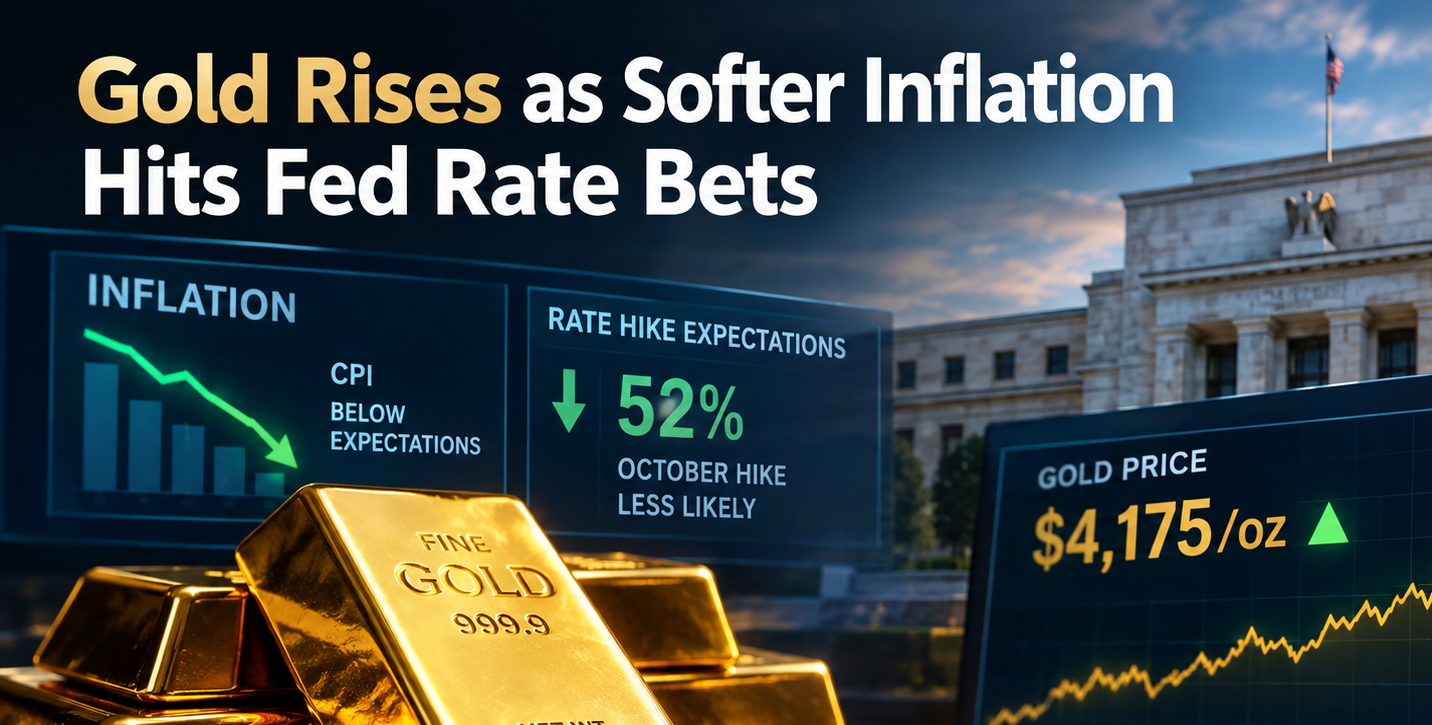
Gold prices edged higher because softer US inflation data lowered expectations for Federal Reserve interest‑rate hikes. The newest economic signals have led traders to rethink the outlook for policy while the US Dollar and Treasury yields stay key factors for gold.
This move occurs while markets keep balancing inflation trends with worries about growth and the Federal Reserve’s future policy decisions.
Softer Inflation Supports Gold
Gold gained after US inflation data showed signs of easing. Lower inflation can lessen pressure on the Federal Reserve to keep or raise interest rates possibly creating a supportive environment for gold.
Gold does not pay interest so gold’s appeal can grow when expectations for interest rates fall. Traders therefore watch inflation releases for clues about the future path of monetary policy.
The newest data has moved some attention away from the possibility of rate increases and toward the broader economic outlook.
Fed Rate‑Hike Bets Decline
Expectations for Federal Reserve rate hikes have driven financial markets. When traders expect rates Treasury yields and the US Dollar can strengthen, often putting pressure on gold.
Softer inflation can change that dynamic. If price pressures keep easing policymakers may have reason to tighten monetary policy further.
However one inflation report does not set the Federal Reserve’s policy direction. Officials are likely to look at a set of indicators including employment, economic growth and future inflation readings.
US Dollar Comes Under Pressure
The US Dollar is another influence on gold prices. A weaker Dollar can make gold relatively cheaper for buyers and may increase demand for the metal.
After the inflation data traders reassessed interest‑rate expectations, which helped change the currency market.
If expectations for US rates keep falling the Dollar could face more pressure. This could give support to gold although currency movements stay sensitive to new economic data.
Treasury Yields Remain in Focus
US Treasury yields also play a role in setting gold’s short‑term direction. Lower yields can reduce the opportunity cost of holding a non‑yielding asset like gold.
If inflation keeps cooling and markets see a restrictive Federal Reserve yields could stay under pressure.
On the hand stronger economic data or new inflation worries could push yields higher again. This means gold traders will keep watching both inflation and economic‑growth indicators.
Markets Await Economic Data
Although softer inflation has backed gold traders stay cautious because the Federal Reserve’s outlook can change as new data arrives.
Employment figures will be especially important. A strong labor market could give policymakers flexibility to keep interest rates high if inflation stays above target.
Conversely signs of a weakening labor market could raise expectations for easing.
The interaction between inflation and employment data will stay central to gold‑market sentiment.
Gold Technical Picture
From a view traders are watching recent support and resistance levels to see if the latest rebound can keep going.
A sustained move above resistance could show that buyers are coming back to the market. Such a move may open the way to levels if it is backed by weaker yields and a softer Dollar.
However if the recent recovery fails to stay gold could become vulnerable to renewed selling pressure.
The market could stay volatile as traders react to changes in expectations.
Key Factors for Gold Traders
Several factors could influence gold prices in the coming sessions: US inflation data, Federal Reserve interest‑rate expectations US Dollar movements Treasury yields, Employment figures, Economic‑growth data, Technical support and resistance. Each factor can influence gold independently. Monetary‑policy expectations often link them.
Gold Outlook
Gold edged higher because softer inflation data lowered expectations for Federal Reserve rate hikes. Lower rate expectations have helped create a supportive backdrop for gold by easing pressure from the Dollar and Treasury yields. Still the outlook stays dependent on economic data. If inflation keeps cooling and employment weakens, expectations for a restrictive Federal Reserve could grow. For now traders will likely keep focusing on inflation trends labor‑market data and central‑bank signals. These factors will decide whether gold can extend its recovery or face renewed pressure, in the coming sessions.