Last Updated on September 4, 2026 by Deon
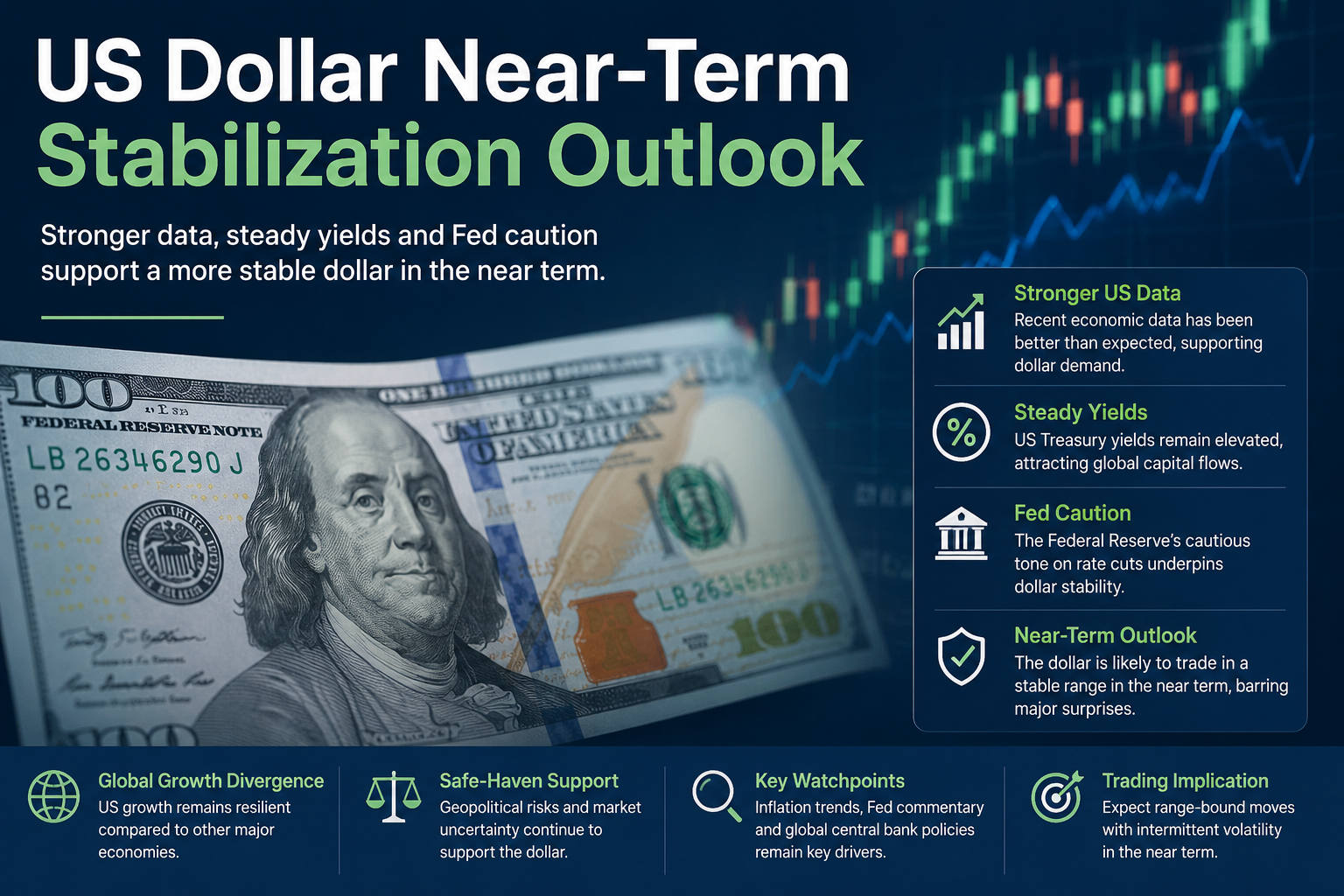
The US Dollar (USD) might soon reach a period of near‑term stability after market weakness says Brown Brothers Harriman (BBH). Although the greenback is still under pressure against some currencies BBH thinks the speed of declines may slow, even though the Japanese Yen may stay a key exception.
This latest market view appears as traders weigh Federal Reserve expectations, global bond yields, oil prices and upcoming US economic data. These factors will likely stay central to the US Dollar outlook over the days and weeks.
US Dollar Weakness May Begin to Stabilize
Elias Haddad of BBH says the US Dollar has recently traded softer against the Japanese Yen and Swiss Franc. Still, the broader outlook indicates that the US Dollar could find some stability in the term instead of continuing to fall sharply across all pairs.
This view follows a period for the US Dollar as markets have changed their expectations for US monetary policy and evaluated the relative strength of the American economy.
The US Dollar’s direction is strongly influenced by interest‑rate expectations. When investors expect the Federal Reserve to keep interest rates or tighten policy further the US Dollar can receive support. Conversely when investors expect a dovish Fed the US Dollar’s appeal may drop.
BBH’s latest analysis says current market pricing may still be too aggressive in expecting more Federal Reserve tightening. The firm sees a chance for a dovish repricing if the Fed keeps interest rates unchanged.
Fed Expectations Remain a Major Market Driver
Federal Reserve policy remains a factor that influences the US dollar forecast. Financial markets have been pricing in expectations for more rate increases ahead of the September Federal Open Market Committee meeting.
Bbh expects the situation to become more balanced if the Fed chooses to hold rates steady and incoming economic data does not justify a stricter policy stance.
A move toward expectations for future rate hikes could limit the US Dollar’s upside. At the time the US Dollar may not face a major decline if the American economy keeps performing relatively well compared to other major economies.
This creates a balanced outlook for the US Dollar. Than a strong bullish or bearish trend the US Dollar could enter a period of consolidation and stabilization.
Japanese Yen Remains an Important Exception
While BBH expects the broader US Dollar to stabilize the Japanese Yen could stay an exception.
The US Dollar has been weaker against the Yen reflecting changing market conditions and developments in financial markets. Currency pairs that involve the Yen can also be very sensitive to expectations and changes in global bond yields.
For traders this means that the overall US Dollar trend may not apply to every currency pair the same way. USD/JPY could keep behaving from pairs such as EUR/USD, USD/CAD or GBP/USD.
The relative policy outlook between the Federal Reserve and other major central banks will stay important. If policy differences narrow the usual support given to the US Dollar by US interest rates could weaken.
Oil Prices and Global Markets Add Another Layer
BBH also highlighted Brent oil near the $100 area. Rising oil prices can influence inflation expectations and financial markets, adding another source of uncertainty for banks.
Higher energy prices may put pressure on inflation making monetary policy decisions more complicated. Central banks must balance the need to control inflation with the risks of keeping interest rates restrictive for long.
For the US Dollar this environment can create signals. Higher inflation expectations could support a policy case but worries, about economic growth and financial conditions may lead investors to expect a more cautious Federal Reserve.
This uncertainty could be another reason why the US Dollar enters a stabilization phase of developing a clear and sustained trend.