
Last Updated on August 28, 2026 by Deon
Canada’s economy is expected to show a recovery in the second quarter of 2026. This recovery may help boost confidence. It may not be enough to fully support the Canadian Dollar. While stronger domestic demand and exports are helping the economy bounce back rising trade tensions between Canada and the United States are creating uncertainty. This uncertainty affects businesses, investors and currency markets.
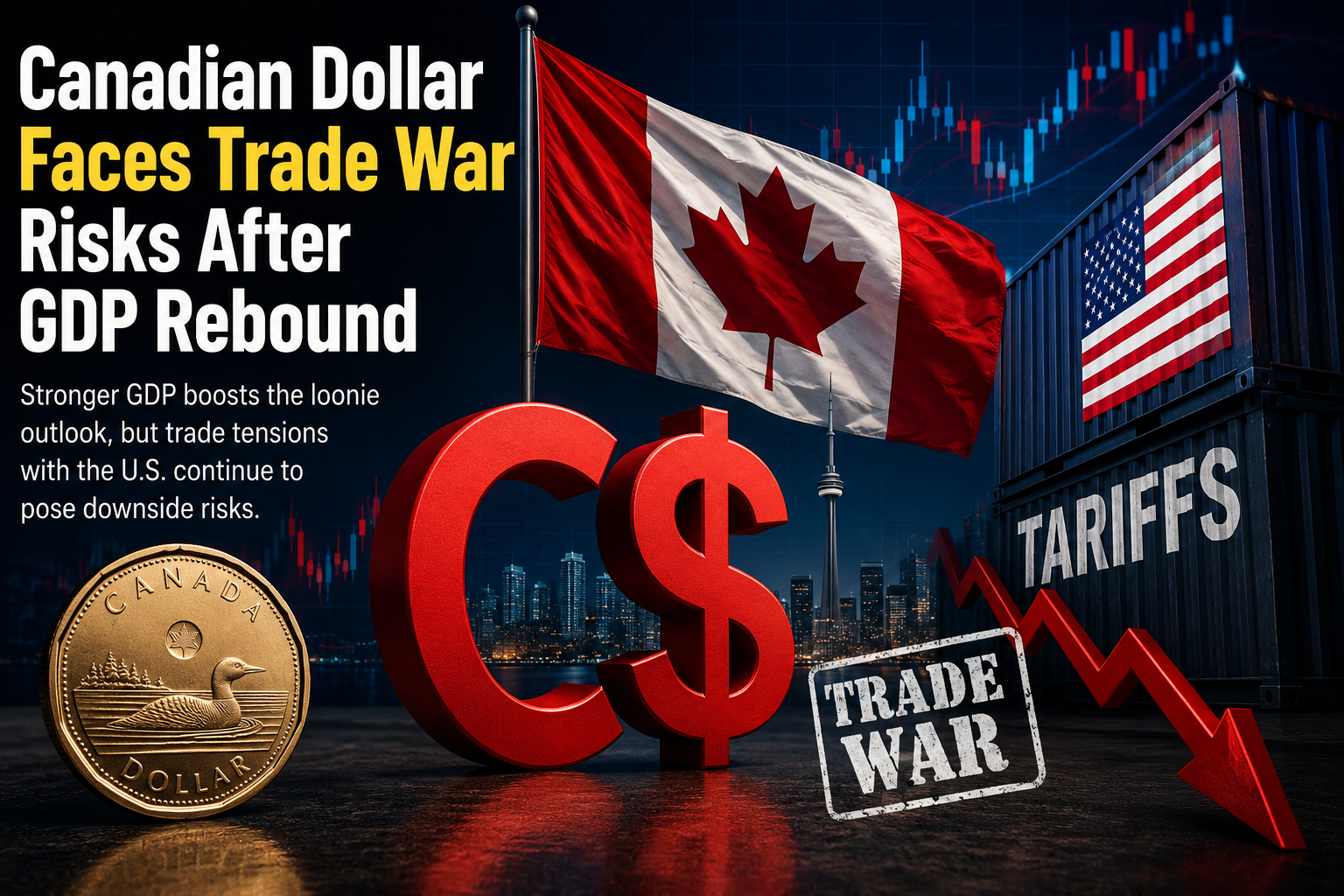
The latest economic outlook suggests that Canada’s Q2 GDP growth could rebound sharply after a first quarter. However the growing trade dispute and new tariffs could threaten the strength of the recovery in the months. This leaves the Canadian Dollar also known as the Loonie facing an outlook.
Canada Q2 GDP Expected to Rebound
Canada’s performance is one of the main factors currently influencing the Canadian Dollar outlook. Brown Brothers Harriman expects real GDP growth to rebound to around 3.4% on a basis in the second quarter following a small contraction in the first quarter. The recovery is expected to be supported by domestic demand and exports.
Other forecasts also point to a Q2 performance. TD Securities expects expenditure-based GDP growth of about 3.5% with exports playing an important role in the recovery. Solid activity in the services sector could also help support economic growth.
A stronger GDP report would normally be positive for the Canadian Dollar. Healthy economic growth can improve investor confidence. Reduce expectations that the Bank of Canada may need to provide immediate monetary support.
However markets are not looking at GDP data
US-Canada Trade War Creates New RisksThe biggest challenge for the economy is the worsening trade relationship with the United States. According to BBH a fresh round of US tariffs has added pressure to Canada’s economic outlook.
The new tariffs reportedly affect $20 billion worth of Canadian imports equivalent to about 0.85% of Canada’s GDP. The measures include tariffs on a range of products while some important sectors and goods are excluded. Canada has also announced retaliatory tariffs in response to the US measures.
Trade tensions can create problems for businesses in several ways. Higher tariffs may increase costs reduce demand for exports and create uncertainty around investment decisions.
This means that even if the Q2 GDP figures show growth investors may focus more on whether the trade dispute could weaken the economy during the second half of 2026.
Canadian Dollar Outlook Remains Uncertain
The Canadian Dollar is sensitive to changes in growth interest rate expectations, commodity prices and trade developments. For this reason the stronger Q2 GDP outlook provides support for the Loonie. The trade war remains a major negative factor.
Recent market analysis has shown that renewed US-Canada trade tensions and weaker oil prices have both put pressure on the Canadian Dollar. USD/CAD has moved higher at times as investors reacted to concerns about tariffs and the outlook for exports.
For traders watching USD/CAD the key question is whether strong economic data can outweigh the risks created by the trade conflict.
If Canada’s GDP growth exceeds expectations the Canadian Dollar could receive short-term support. However continued tariff escalation could limit those gains.
What Could the Bank of Canada Do?
The stronger economic rebound may also influence the outlook for the Bank of Canada. A healthier economy gives policymakers flexibility and could reduce the need for immediate interest rate cuts.
BBH noted that core inflation remains close to the Bank of Canada’s 2% target giving the bank room to keep interest rates steady while monitoring economic developments.
Standard Chartered has similarly suggested that the Bank of Canada could keep its policy rate at 2.25% and delay a possible rate cut as the Q2 GDP rebound reduces the need for immediate monetary easing. However policymakers are still likely to watch the impact of tariffs before making future decisions.
This creates a situation for the Canadian Dollar. If the Bank of Canada remains cautious and avoids cutting rates CAD could receive support. On the hand if trade tensions begin to damage growth significantly expectations for future rate cuts could return.
Oil Prices Are Another Key Factor
Oil prices are also important for the economy and the Loonie. Canada is an energy exporter and changes in crude oil prices can influence demand for the Canadian Dollar.
Recent declines in oil prices have added pressure to CAD particularly as investors are already concerned about the impact of the US-Canada trade dispute. FXStreet market reports noted that lower crude prices and renewed trade tensions have both weighed on the Loonie.
If oil prices recover the Canadian Dollar could receive support. However the overall impact will also depend on broader market sentiment and the strength of the US Dollar.
What to Watch for USD/CAD
Several factors could influence the USD/CAD pair in the coming weeks:
Canada Q2 GDP data: A stronger-than-expected result could support the Canadian Dollar.
US-Canada trade developments: Any escalation in tariffs could create pressure on CAD.
Bank of Canada policy: Interest rate expectations will remain a driver.
Oil prices: Higher crude prices may support Canadas export outlook and the Loonie.
US economic data: Federal Reserve expectations and US Dollar demand can strongly influence USD/CAD.
The balance between these factors will determine whether the Canadian Dollar can build on its economic recovery or remain under pressure from external risks.
Final Thoughts
Canada’s Q2 GDP rebound offers a sign for the economy. Growth supported by demand, exports and services activity could help improve confidence in the Canadian economic outlook.
However the stronger growth picture is being overshadowed by the worsening US-Canada trade dispute. New tariffs and the risk of retaliation could affect exports, business investment and future GDP growth.
For the Canadian Dollar this creates a balance. Strong economic data and a cautious Bank of Canada could support the Loonie while trade tensions, lower oil prices and a stronger US Dollar may limit its upside.
As a result the near-term CAD outlook will likely depend not on Canada’s Q2 GDP figures but also on how the trade conflict develops. Investors and forex traders will continue to watch data, Bank of Canada signals, oil prices and tariff announcements for the next major direction, in USD/CAD.